
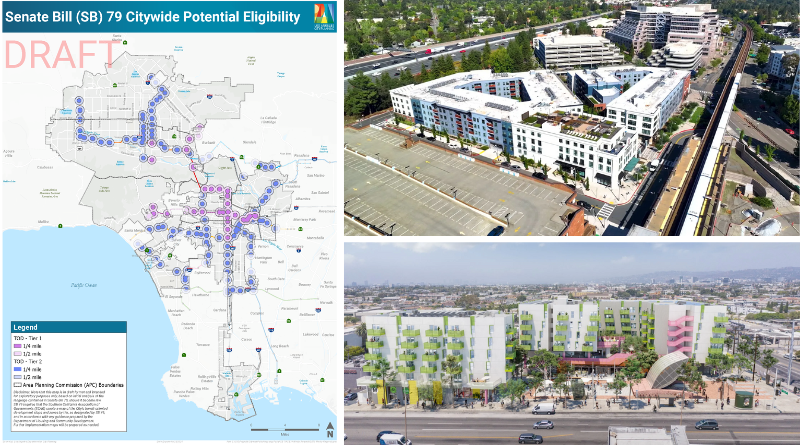
Clockwise from left: draft map of eligible TOD sites in the City of Los Angeles (Los Angeles City Planning); aerial view of The Waymark Apartments and the Walnut Creek BART Station in Walnut Creek, CA (The Waymark); exterior view of the Santa Monica & Vermont Apartments and the entrance to LA Metro’s Vermont/Santa Monica Station (LA Metro).
California faces a housing shortage, leading to record-high costs and increased rates of homelessness. To meet demand, the state estimates that it needs 2.5 million new homes by 2030 (CBS LA, 2022). In 2021, the State announced a goal of 180,000 new homes per year (California YIMBY, n.d.-b); however, this metric remains below the threshold required to reach the 2.5 million target, and current development continues to fall short.
In 2024, California issued permits for only 102,000 privately owned housing units statewide—the lowest number since 2015 (United States Census Bureau, n.d.). Furthermore, municipalities in the Los Angeles metro area authorized only 10,000 multifamily units in 2025, a significant drop from the 17,500 approved in 2015 (Kiernan, 2025). Many factors contribute to this shortage, including local zoning restrictions, high interest rates, and the rising costs for land, materials, and labor. Senate Bill 79 (S.B. 79) aims to address these zoning restrictions while specifically increasing the supply in transit-accessible areas.
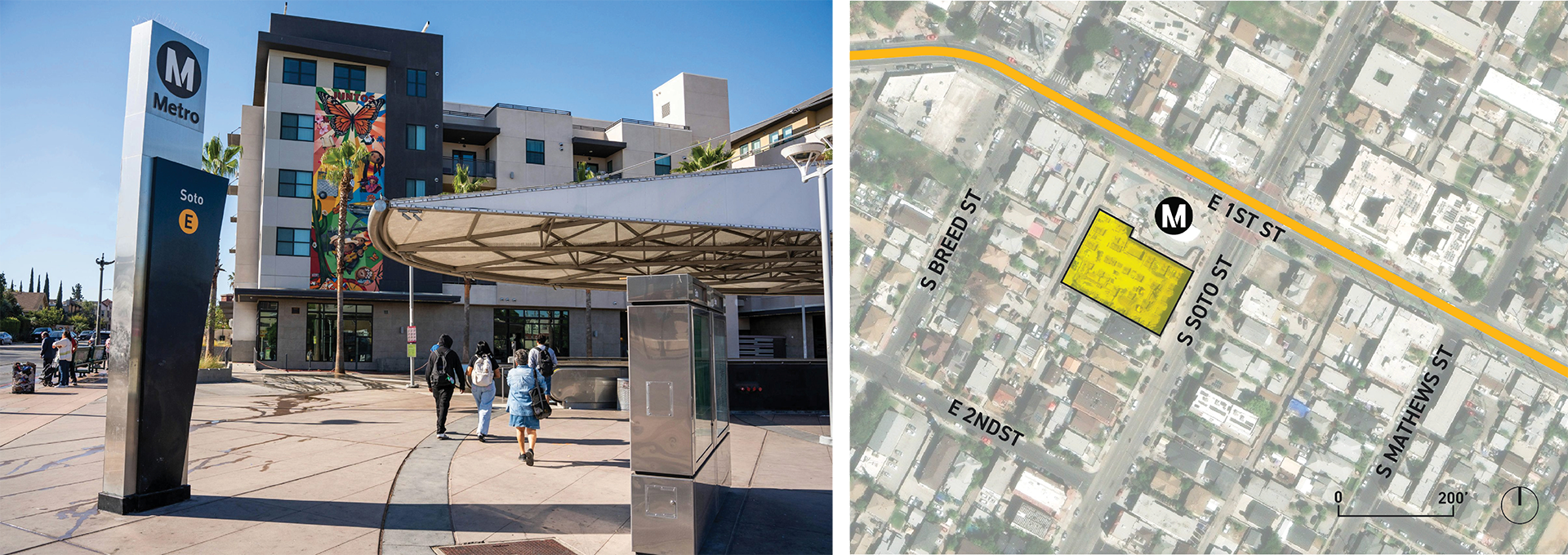
Senate Bill 79 – Housing Development: Transit-Oriented Development
In October 2025, Governor Gavin Newsom signed the Abundant & Affordable Homes Near Transit Act (S.B. 79) into law, creating statewide standards for housing development near transit hubs. The bill requires local jurisdictions to permit higher densities near qualified high-frequency transit stops. Scheduled to take effect on July 1, 2026, the bill will apply to areas within a half-mile of eligible transit hubs and will supersede existing local zoning (Flemming, 2025; S.B. 79, 2025). Required density maximums vary based on the tier of the transit, which is determined by service type and distance.

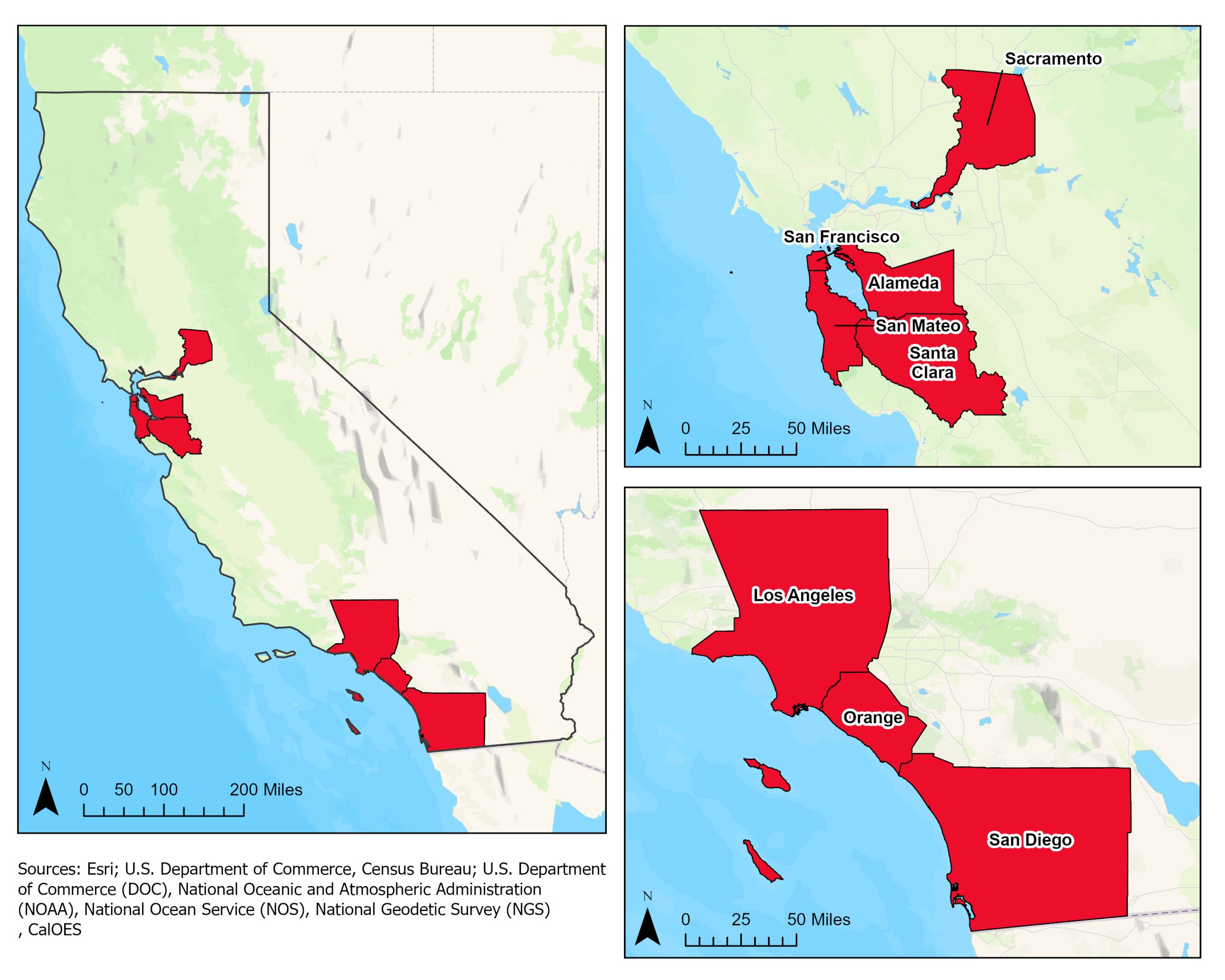
The bill applies exclusively to “urban transit counties” with at least 15 passenger rail stations—currently eight counties in the state’s densest urban areas (Kiernan, 2025; S.B. 79, 2025). Each of California’s Metropolitan Planning Organizations (MPOs) must create a map of qualifying transit-oriented development (TOD) stops and zones by tier (S.B. 79, 2025). Several entities, including the City and County of Los Angeles and the Center for Housing Policy and Design at UC San Diego, have released draft maps of the affected areas, though these remain subject to refinement.
Standards and Affordability
S.B. 79’s standards apply to housing developments that meet the following criteria:
- Scale: At least five units
- Density: At least 30 dwelling units per acre
- Zoning: Located on sites already zoned for commercial, residential, or mixed use (ABAG, 2025; Strupp, 2025).

Beyond density, the bill mandates affordability requirements. The specific number of affordable units depends on the targeted affordability level, though developments with ten or fewer units are exempt (S.B. 79, 2025). Notably, higher local inclusionary requirements will supersede the bill’s minimums, and offer density bonuses to further incentivize affordability (Strupp, 2025). To prevent displacement, projects are ineligible if the site has included a multifamily building subject to price or rent control within the past seven years (ABAG, 2025; Strupp, 2025).
Local Implementation and Exemptions
Local jurisdictions may adopt a local TOD alternative plan. If this plan aligns sufficiently with the law’s standards, the jurisdiction becomes exempt from S.B. 79 (ABAG, 2025; S.B. 79, 2025). Communities can adjust density from the S.B. 79 baseline but cannot decrease any site’s capacity by more than 50 percent or increase it by more than 200 percent.
Implementation can be deferred for up to one year after a jurisdiction’s seventh round housing element is approved—potentially as late as 2030—under specific conditions:
- The site already allows at least 50 percent of the required density and Floor Area Ratio (FAR)
- The site is in a sensitive area (historic preservation district, high fire risk, or sea-level rise zone (ABAG, 2025; CE Noticias Financieras, 2025).
- The site lacks pedestrian access (over one mile) to the transit stop or is part of an industrial employment hub (ABAG, 2025).
Support for S.B. 79
Proponents argue that removing zoning barriers is essential to solving the state’s housing crisis. California YIMBY (Yes In My Backyard), a statewide pro-housing advocacy organization, argues that increasing housing supply in high-demand markets helps lower rents or slow rent growth over the long term (California YIMBY, n.d.-b).
Developers further contend that the crisis is exacerbated by:
- Zoning restrictions that prohibit high-density projects
- Discretionary review processes that delay projects, increase carrying costs, and often render developments financially unfeasible (Gupta, 2025).
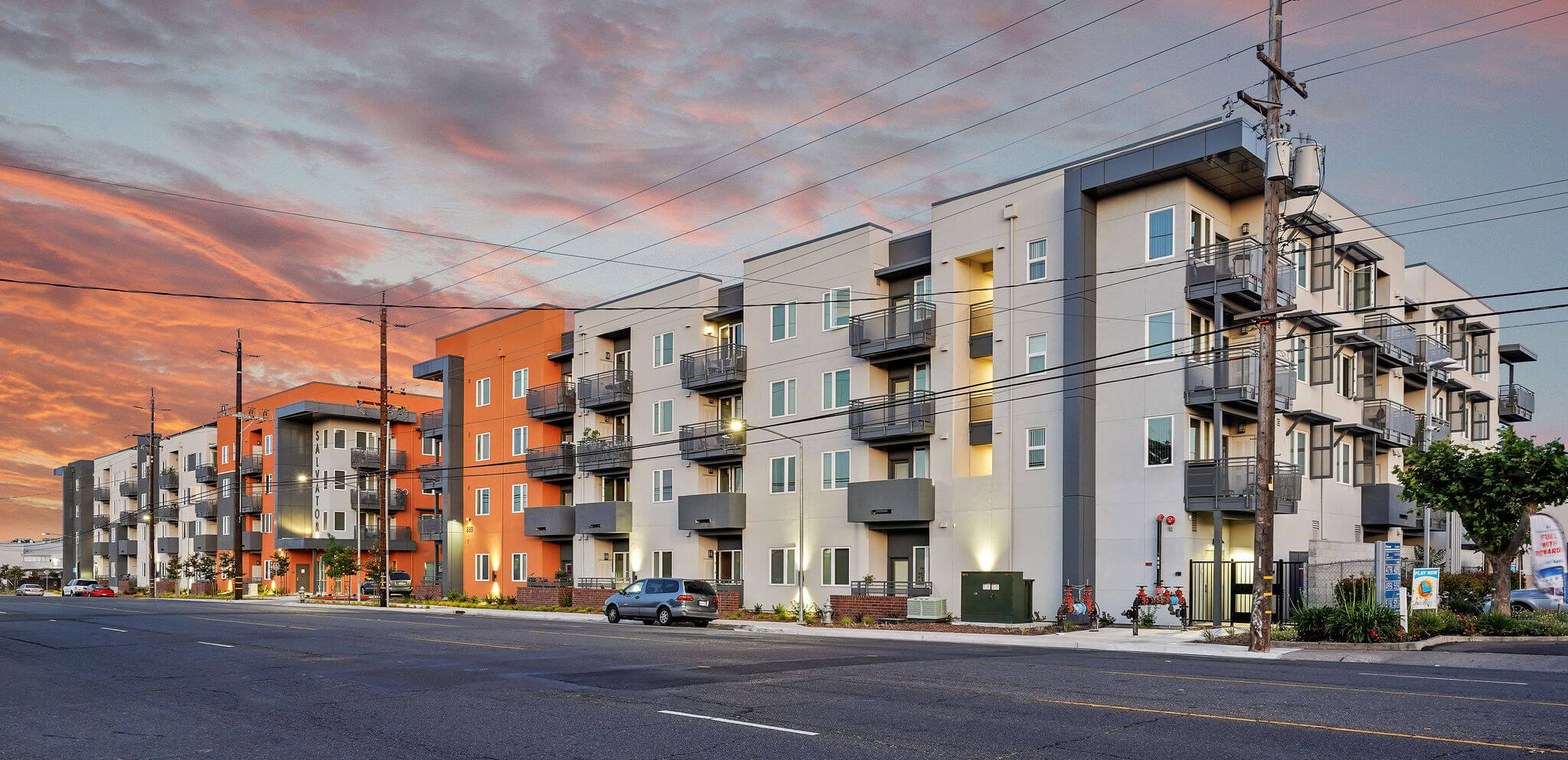
S.B. 79 seeks to streamline this by requiring approval for all eligible projects.
From an environmental perspective, advocates maintain that clustering housing near high-frequency transit hubs incentivizes public transit use and mitigates regional pollution. Because much of California’s existing housing stock is situated far from major employment centers, many residents are forced into long, car-dependent commutes that increase carbon emissions and exacerbate traffic congestion (California YIMBY, n.d.-b). By bridging this gap, S.B. 79 functions as both a housing strategy and a climate policy, addressing environmental concerns along with the affordability crisis. Furthermore, California YIMBY contends that concentrating development within already-developed urban cores preserves vital open space and farmland and reduces the fiscal and environmental costs of building additional infrastructure. The organization also disputes the notion that S.B. 79 eliminates local control, pointing out that the TOD alternative plan provides a framework for municipalities to design flexible, context-sensitive growth strategies. The bill only requires jurisdictions to permit higher densities rather than mandating them or the construction of new units (California YIMBY, n.d.-a; Gupta, 2025).
Opposition to S.B. 79
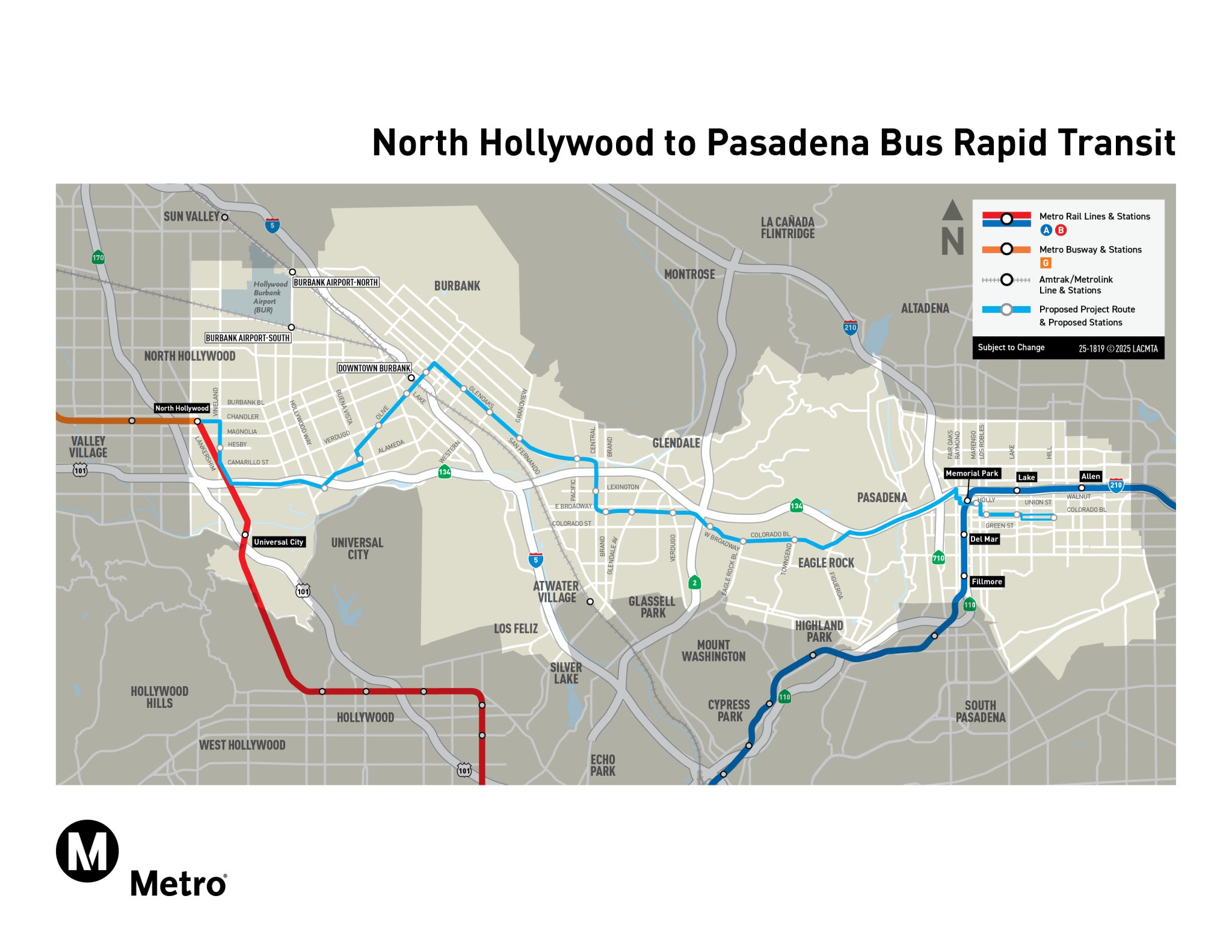
The bill has faced significant pushback from residents and local governments. In Burbank residents have protested a planned 18-mile Bus Rapid Transit (BRT) project since 2017 (Christopher, 2025). While LA Metro originally planned to start construction in early 2025, the passage of S.B. 79 has reinvigorated opposition; because BRT stops qualify for the bill’s standards, residents fear the law will affect their single-family neighborhoods.
Several local governments, including Los Angeles, argue S.B. 79 overrides local land-use control and community input (Gupta, 2025; Kiernan, 2025). Mayor Karen Bass and the L.A. City Council (which voted 8-5 to oppose the bill) expressed concerns that statewide standards ignore community context and could accelerate gentrification (Kiernan, 2025). Similarly, San Francisco fears that the law will force development in eastern neighborhoods previously excluded from the city’s 2022 housing plan element to avoid exacerbating displacement (Menconi, 2025).
Transit-Oriented Housing Beyond California
California’s S.B. 79 is part of a broader national shift toward integrating housing with public transportation networks. Across the East Coast, states like Maryland, New York, Massachusetts, and Connecticut are implementing various legislative frameworks—ranging from voluntary incentives to mandatory “as-of-right” zoning—to address the housing crisis through TOD.
In a move to bypass the local bottlenecks that often stall housing production, New York and Massachusetts have experimented with state-imposed density floors.
New York: In 2022, Governor Kathy Hochul proposed the Transit Oriented Development Act. If enacted, this would mandate that municipalities allow up to 25 dwelling units per acre on residential land located within a half-mile of transit hubs (Been et al., 2023).
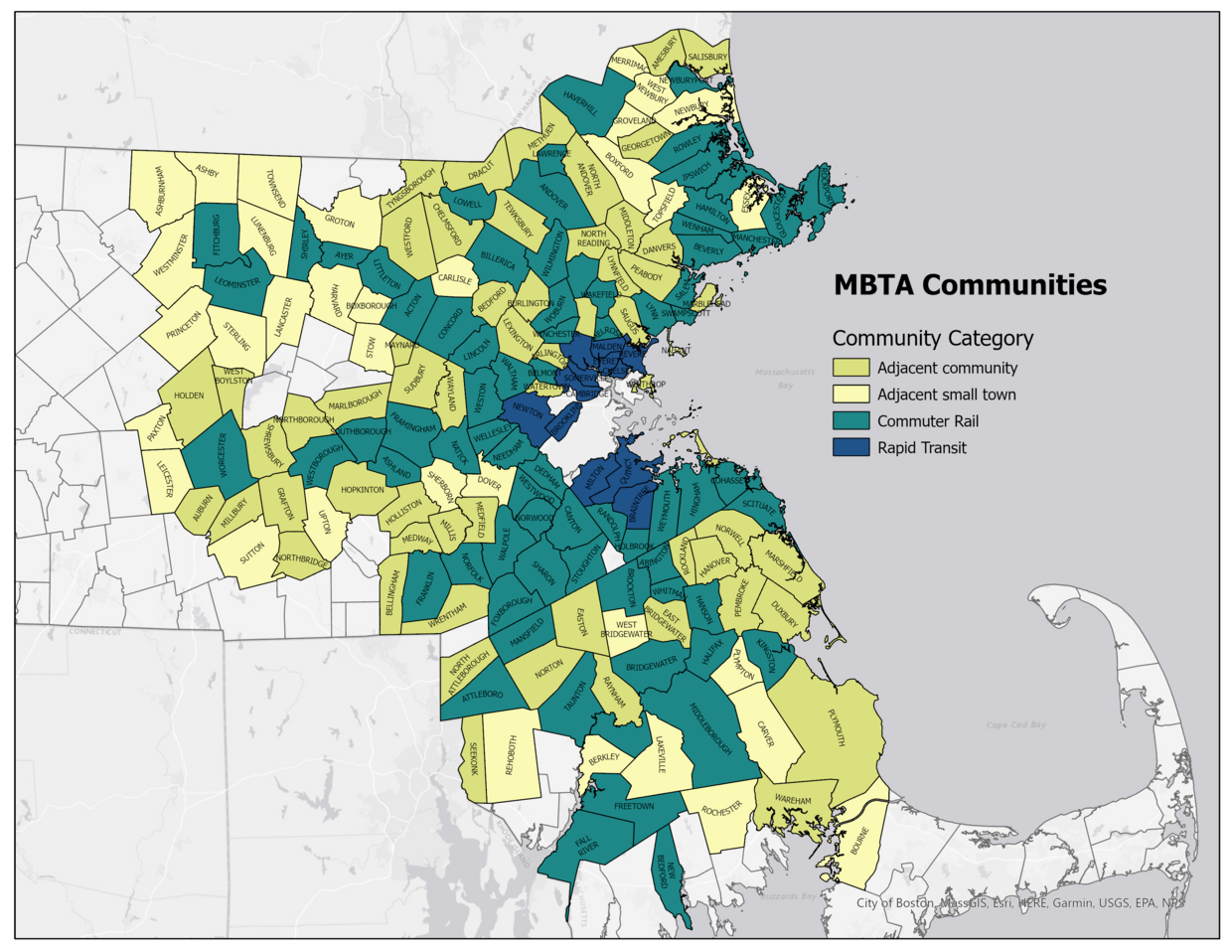
Massachusetts: The MBTA Communities Act, signed in 2021, affects 177 municipalities (Infranca, 2025). It requires these jurisdictions to establish “reasonably sized” districts within a half-mile of transit that permits as-of-right multi-family housing at a density of up to 15 units per acre. To maintain flexibility, the law utilizes a four-tier system, allowing the “reasonable size” of a district to be scaled based on specific community characteristics (Massachusetts EOHLC, n.d.). As of late 2025, 163 municipalities have adopted new zoning regulations, with 129 currently meeting full or conditional compliance. See our article Transit, Zoning, and Affordable Housing: Insights from Massachusetts for more information.
Rather than mandating zoning changes, Maryland and Connecticut treat density as a reward for affordability and smart planning.
Maryland: The state offers density bonuses for housing projects that are located within three-quarters of a mile of a rail station, provided they designate at least 15 percent of units as affordable (Infranca, 2025).
Connecticut: Since 2008, the Housing for Economic Growth program has allowed towns to create Incentive Housing Zones (IHZs). These overlay zones increase base density by at least 25 percent and unlock state funding for developments that are at least 20 percent affordable (Connecticut State Department of Housing, n.d.). As of January 2024, 11 municipalities have adopted state-approved IHZs. The landscape in Connecticut shifted in November 2025, with the signing of H.B. 8002, “An Act Concerning Housing Growth.” This legislation requires all municipalities to draft a Housing Growth Plan by June 1, 2028 (Marseca et al., 2025). To meet these targets, municipalities can opt into as-of-right approvals of “transit community middle housing,” bridging the gap between voluntary incentives and mandatory planning.
New Jersey’s Strategy
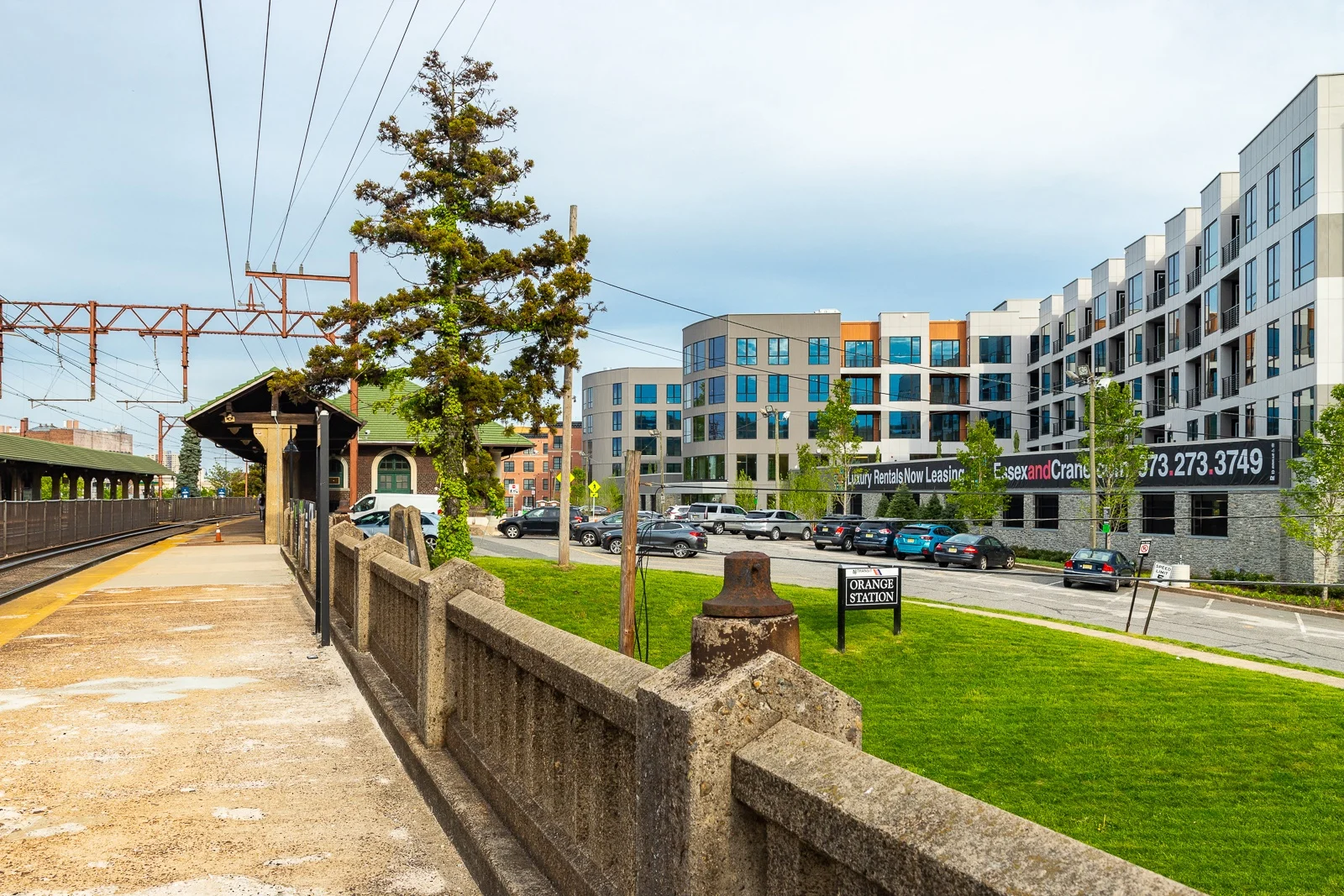
Unlike its neighbors, New Jersey does not currently mandate TOD through a state law. Instead, it leverages a network of incentives to encourage high-density, transit-adjacent growth.
The Transit Village Initiative
New Jersey has 37 Transit Villages. These communities have made formal commitments to transit-supportive zoning and redevelopment, including residential components, within a half-mile of a transit stop (NJDOT, n.d.).
Financial & Regulatory Incentives
Low-Income Housing Tax Credits (LIHTC) Scoring: The state’s Qualified Allocation Plan for LIHTC awards up to five extra points to developers building near public transit, making these projects more competitive for federal funding (NJHMFA, n.d.).
The Bonus Credit System: For the State’s fourth round of affordable housing obligations, municipalities receive a one-half bonus credit for every affordable housing unit within a half-mile of a station or significant stop. This means 10 units built near transit count as 15 toward a municipality’s total legal obligation (P.L. 2024, c. 2).
The success and impact that S.B. 79 will have on California’s transit and housing climate is yet to be determined, but it marks an important first step toward creating the density needed to support greater affordability and accessibility. By evaluating the outcomes of California’s S.B. 79 alongside these other models, New Jersey can refine its incentive structures and potentially adopt more standardized density goals to accelerate housing production near transit assets. This initiative could help New Jersey meetgoals outlined in the state’s fourth round of affordable housing, and support NJ TRANSIT’s new LAND plan to maximize revenue from land assets.
Sources
An Act Concerning Affordable Housing, N.J. P.L. 2024, c. 2 (2024). https://pub.njleg.state.nj.us/Bills/2024/PL24/2_.PDF
Association of Bay Area Governments (ABAG). (2025, November 21). Senate Bill 79 (2025) Summary. https://abag.ca.gov/sites/default/files/documents/2025-11/SB-79-Summary-11212025.pdf?cb=a35f7fc7
Been, V., Jonlin, A., & Kazis, N. (2023). “Encouraging Transit-oriented Development.” Critical Land Use and Housing Issues for New York State in 2023. NYU Furman Center. https://furmancenter.org/files/publications/1_Encouraging_Transit-oriented_Development_Final.pdf
California YIMBY. (n.d.). SB 79. https://cayimby.org/legislation/sb-79/
California YIMBY. (n.d.) SB 79: Myths & Facts. https://cayimby.org/sb-79-explained-more-homes-near-transit/
CBS LA. (2022, March 3). California Must Build 2.5M Houses by 2030 to Avoid Exacerbating Homeless Crisis, Report Finds. CBS News. https://www.cbsnews.com/losangeles/news/california-must-build-2-5m-houses-by-2030-to-avoid-exacerbating-homeless-crisis-report-finds/
CE Noticias Financieras. (2025, October 11). “In California: What SB 79 is, Who’s Criticizing It and Why It’s Driving Major Housing Reform. https://login.proxy.libraries.rutgers.edu/login?qurl=https%3A%2F%2Fwww.proquest.com%2Fwire-feeds%2Fcalifornia-what-sb-79-is-whos-criticizing-why%2Fdocview%2F3260273046%2Fse-2%3Faccountid%3D13626
Christopher, B. (2025, October 22). Why California’s Historic Housing Law Gave Activists a New Reason to Battle the Bus. CalMatters. https://calmatters.org/housing/2025/10/sb79-housing-law-la-buses/
Connecticut State Department of Housing. (n.d.). Incentive Housing Zone Program/Housing for Economic Growth (HEG) Program. State of Connecticut. https://portal.ct.gov/doh/doh/programs/incentive-housing-zone-program
Flemming, J. (2025, September 12). California Lawmakers Pass SB 79, Housing Bill that Brings Dense Housing to Transit Hubs. Los Angeles Times. https://login.proxy.libraries.rutgers.edu/login?qurl=https%3A%2F%2Fwww.proquest.com%2Fblogs-podcasts-websites%2Fcalifornia-lawmakers-pass-sb-79-housing-bill-that%2Fdocview%2F3249982899%2Fse-2%3Faccountid%3D13626
Gupta, G. (2025, September 19). Controversial Housing Bill Aims to Address California’s Affordability Crisis. The Washington Post. https://wapo.st/4aA7g0l
Housing Development: Transit-Oriented Development, Cal. S.B. 79 (2025-2026), Chapter 512 (Cal. Stat. 2025). https://leginfo.legislature.ca.gov/faces/billTextClient.xhtml?bill_id=202520260SB79
Infranca, J. (2025). Striking a Balance: Massachusetts’ MBTA Communities Act and the Channeling of Local Control. Virginia Environmental Law Journal (43)1. 119–140. https://heinonline-org.proxy.libraries.rutgers.edu/HOL/Page?handle=hein.journals/velj43&id=127&collection=journals&index=
Kiernan, P. (2025, October 10). California Wants to Make it Easier to Build Housing, Los Angeles Objects. Wall Street Journal. https://www.wsj.com/economy/housing/california-housing-bill-los-angeles-pushback-e339bc20?st=ePtT5c&reflink=desktopwebshare_permalink
Marseca, M.L., Seeman, E.J., Hoyler, R.D., & Yerby, E. (2025, December 3). New Laws to Promote Affordable Housing Development. The National Law Review. https://natlawreview.com/article/new-laws-promote-affordable-housing-development
Massachusetts Executive Office of Housing and Livable Communities (EOHLC). (n.d.) Multi-Family Zoning Requirement for MBTA Communities. Commonwealth of Massachusetts. https://www.mass.gov/info-details/multi-family-zoning-requirement-for-mbta-communities
Menconi, K. (2025, July 13). State Housing Bill Calls City’s Zoning Plans into Question. San Francisco Examiner. https://login.proxy.libraries.rutgers.edu/login?qurl=https%3A%2F%2Fwww.proquest.com%2Fnewspapers%2Fstate-housing-bill-calls-citys-zoning-plans-into%2Fdocview%2F3231303757%2Fse-2%3Faccountid%3D13626
New Jersey Department of Transportation (NJDOT). (n.d.). Overview. State of New Jersey. https://www.nj.gov/transportation/community/village/
New Jersey Housing and Mortgage Finance Agency (NJHMFA). (n.d.). QAP. State of New Jersey. https://www.nj.gov/dca/hmfa/developers/lihtc/qap/
NJTOD. (2025, February 28). Transit, Zoning, and Affordable Housing: Insights from Massachusetts. https://www.njtod.org/mbtacommunities/
Strupp, J. (2025, September 17). California Set to Allow Denser Housing by Transit. Smart Cities Dive. https://www.smartcitiesdive.com/news/california-tod-housing-transit-bill-sb-79/760328/
United States Census Bureau. (n.d.). Annual Tables, Charts, and Maps. https://www.census.gov/construction/bps/annual.html