
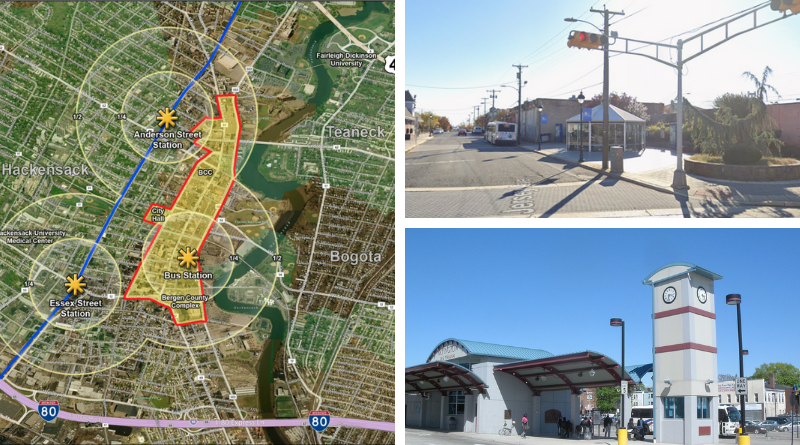
Hackensack Rehabilitation Area (left) • Pleasantville Bus Terminal • Irvington Bus Terminal (right top-to-bottom)
Providing over 138 million trips in 2024, NJ TRANSIT’s buses are a vital—yet often undervalued—public resource for New Jersey residents. When supported by reliable, high-frequency service, bus stops function as development hubs much like commuter rail stations. Of the 37 municipalities designated by the state’s Transit Village Initiative, four have centered development around bus stations or terminals: Pleasantville (1999), Irvington (2015), Hackensack (2015), and Newark (2021).
Pleasantville: Revitalizing the First NJ Bus Transit Village
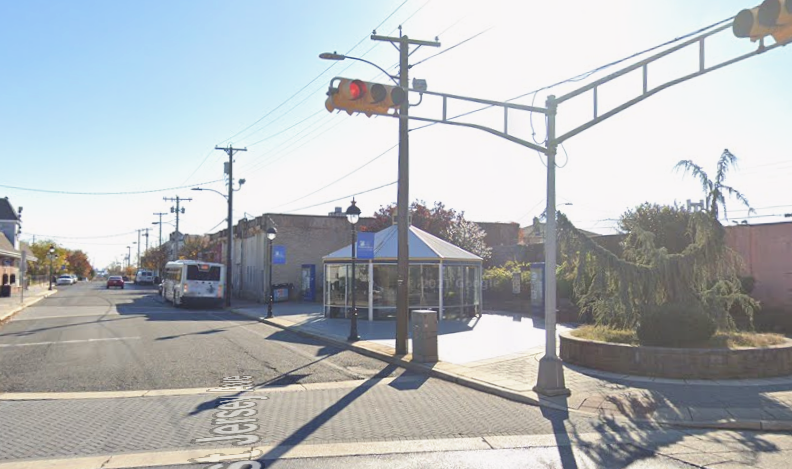
The state designated Pleasantville as a New Jersey Transit Village at the initiative’s 1999 launch alongside four rail-served municipalities: Morristown, Rutherford, South Amboy, and South Orange. Since this designation, the City has secured millions in transit infrastructure grants, including $170,000 for bus pavilion and Park-and-Ride upgrades in FY 2025 and $330,000 for the Old Turnpike Improvement Program in FY 2026. The Pleasantville Bus Terminal sits along a former rail line and offers NJ TRANSIT service on bus lines 502, 507, 508, 509, 554, and 559.
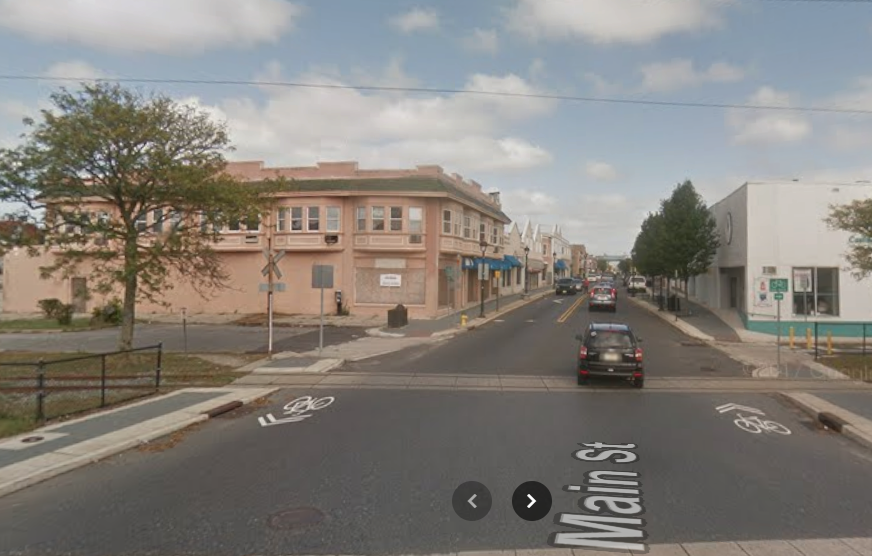
Pleasantville’s early 20th-century prominence stemmed from passenger rail service to Atlantic City. Population doubled by the 1920s as commerce grew around Main Street. However, post-WWII highway construction eroded rail power and shoppers chose malls over downtowns. Retail vacancies spread, real estate prices plummeted, and the city eventually lost all rail access.
Pleasantville still feels the effects of this decline. In 2023, the median household income of $52,402 was 48 percent lower than the state’s $101,050. Meanwhile, housing costs remain high: median gross rent is $1,328, only 19 percent less than in the state overall. This creates a high rent-burden: 54.7 percent of renter households and 51.3 percent of owner-occupied households are cost-burdened, compared to statewide rates of 48.3 percent and 40.6 percent, respectively.
Designating Pleasantville amongst the first Transit Villages was designed in part to help reverse this decline. The state also recognizes Pleasantville as a Special Urban Area, a NJEDA Urban Initiative municipality, and an Urban Enterprise Zone. In 2007, the City launched its first major transit-oriented development (TOD) partnership with RPM Development. The City purchased a 5-acre vacant parcel next to the terminal and selected RPM in 2013 to develop it. The resulting project—Milan & Main at City Center—opened in 2015 with 270 units and more than 18,000 sq. ft. of ground-floor retail space, earning the Governor’s Housing Award and LEED Platinum certification.
While the City only approved 45 housing units from 2017 to 2023, other revitalization efforts continue. In 2022, the Neighborhood Preservation Program and Amber Art and Design launched a project to add art highlighting Pleasantville’s history to the terminal. Additionally, the City has used Transit Village grant funds for streetscape improvements, signage installation, LED lighting, and pedestrian walkways.
Irvington: Leveraging New Jersey’s 2nd Busiest Station
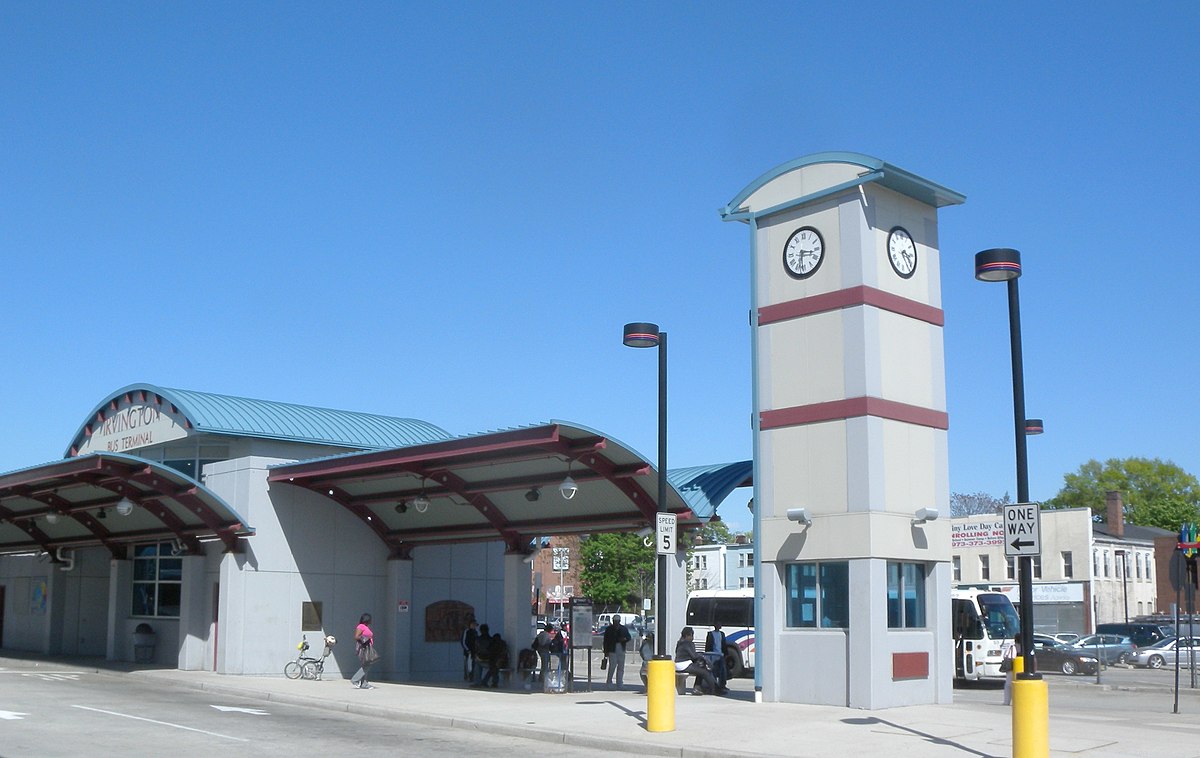
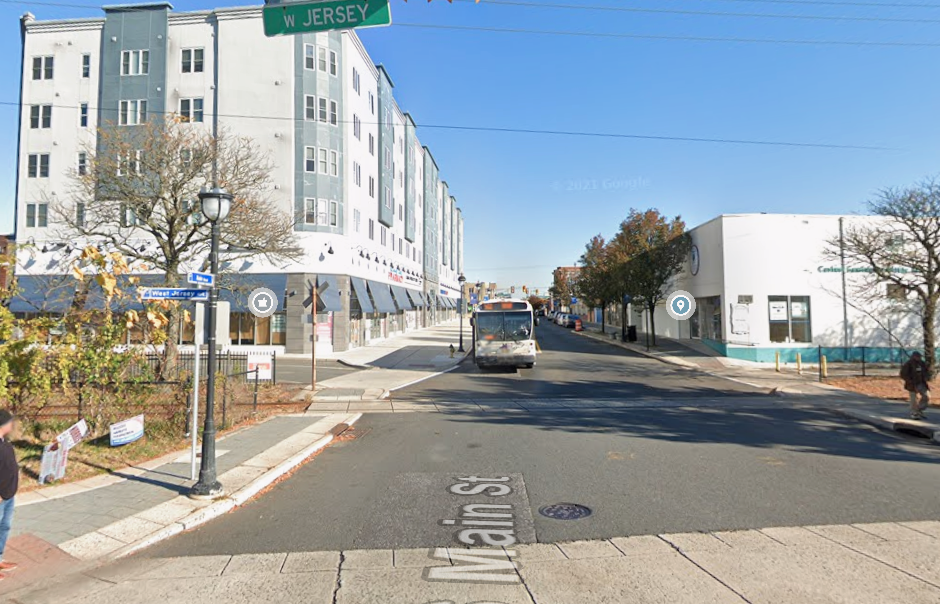
In 2015, the New Jersey Transit Village program designated the area around Irvington Bus Terminal, the second-busiest bus station in New Jersey, serving around 13,000 passengers daily. The area also sits within an Urban Enterprise Zone and the Springfield Avenue Business Improvement District. The terminal serves ten routes, including Route 107 (35-minute trips to the Port Authority Bus Terminal in Manhattan) and Route GO25 (19-minute trips to Newark Penn Station).
In 2004, NJ TRANSIT completed a $4.4 million renovation of the terminal that added a waiting room, widened the bus lanes, upgraded pedestrian infrastructure, streamlined bus circulation, and expanded the Park-and-Ride facilities. Soon after, NJ TRANSIT launched its first GO route here, offering enhanced service with quicker trips and partial traffic signal priority.
Irvington’s 2015 Transit Village designation followed a public visioning process where officials, residents, and business owners proposed enhancing the Springfield Avenue streetscape with new signage and pedestrian safety measures, while approving new construction near the bus terminal. Building on this momentum, the Township’s 2022 Master Plan prioritizes housing affordability and population growth by recommending land use changes, increased homeownership, and vacant land redevelopment. Several active projects now advance these goals through new construction.
722 Chancellor Avenue: In 2023, the NRP Group opened this 56-unit affordable housing development, which includes five units designed for residents with special needs. Located next to a bus stop and near the terminal. The Township supported construction with partial funding and collaborated with the New Jersey Housing Mortgage Finance Agency, JP Morgan Chase Bank, Hudson Housing, and the Irvington Housing Authority.
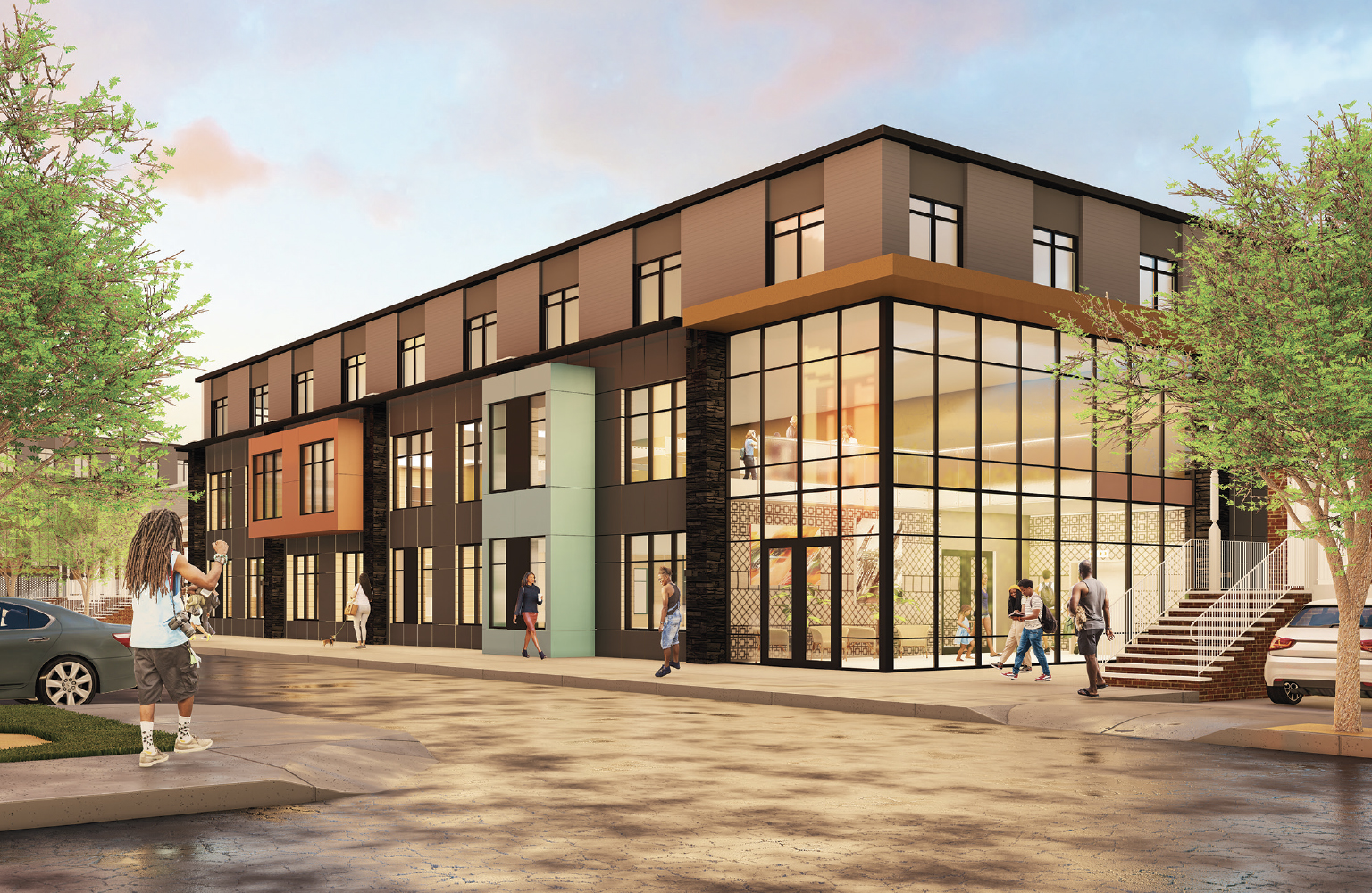
Sankofa Enclave at Twenty First Street: The Thatcher Duncan group broke ground on this $100 million project in October 2024 on a decades-vacant site less than a mile from the terminal. Phase one includes 15 owner-occupied duplexes; phase two includes 240 affordable rental units (including 5 for young women aging out of foster care), a 30,000 sq. ft. community center, and a farmer’s market.
Springfield Avenue Mixed-Use: In April 2025, the Planning Board approved a 156-unit project with 10,000 sq. ft. of ground-floor retail. Located next to a bus station and a half-mile from the Irvington Bus Terminal, the project will advance the Township’s East Ward/East Springfield Avenue Redevelopment Plan and benefit from the area’s Transit Village and Urban Enterprise Zone status.
Hackensack: A Bus-Led Urban Renaissance
Hackensack, home to nearly 46,000 residents and the Bergen County seat, possessed the pieces necessary for revitalization in the 2000s, including job centers like Hackensack Meridian Health, county facilities, and higher education institutions. The city hosts two NJ TRANSIT rail stations—Essex Street and Anderson Street on the Pascack Valley Line—and offers significant bus service through the Hackensack Bus Terminal. Despite these assets, the downtown suffered a decades-long downturn marked by deteriorating infrastructure and high rates of retail vacancy.
To spark redevelopment, the Hackensack Planning Board adopted a Downtown Rehabilitation Plan and new zoning regulations in 2012. Developed with Upper Main Alliance Special Improvement District, the plan and regulations enabled increased density across a 163-acre area by reducing parking requirements and increasing maximum height requirements. Crucially, the plan established the Hackensack Bus Terminal as a focal point for future growth.
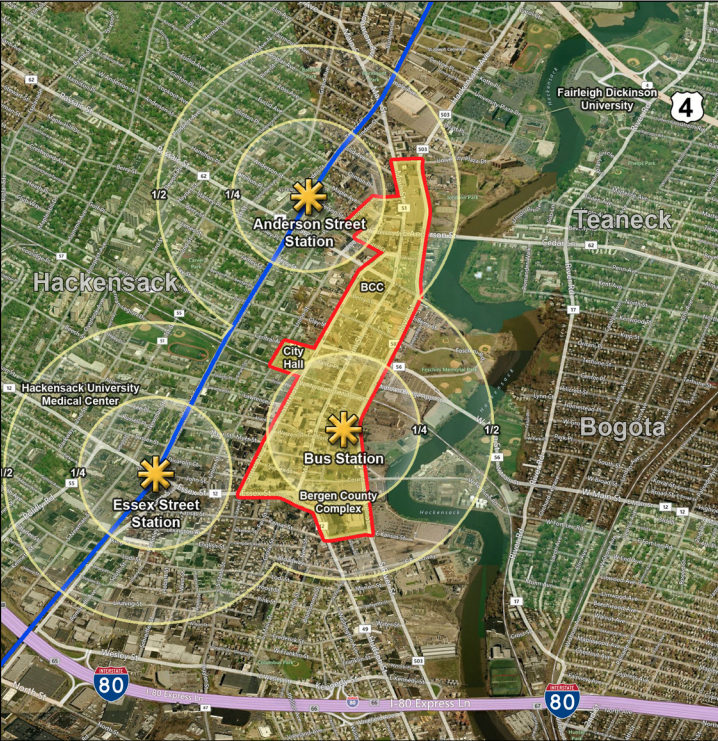
By adopting this TOD-supportive framework, Hackensack met the necessary benchmarks for the Transit Village Initiative and was designated as New Jersey’s 32nd Transit Village in 2016. Although the city has two rail stations, the Transit Village area centers on the bus terminal because it serves as the more significant transit mode. In 2024, an estimated 1,021,761 riders used the Hackensack Bus Terminal, compared to only 133,657 riders at the city’s rail stations. Located adjacent to the Main Street commercial district, the terminal provides service to Newark Penn Station, Journal Square, the George Washington Bridge Station in upper Manhattan, Bergen Community College, and the Meadowlands, while local routes connect to the city’s rail stations.
This strategy triggered a wave of new construction; from 2017-2022, Hackensack approved 2,681 new multifamily units (including 1,188 in 2022 alone), compared to just 814 units between 2004 and 2016. The city has utilized Payment in Lieu of Taxes (PILOTs) to encourage this investment, supporting over $410 million in assessed property value by 2025. While housing affordability remains a challenge—with median rent increasing by 102.4 percent since 2000 compared to a 61.2 percent rise in median household income—accessible public transit provides a cost-saving alternative. Approximately 31 percent of residents commute via public transit, walk, or work from home, with 2,800 residents choosing the more affordable bus service versus the 363 residents choosing rail.
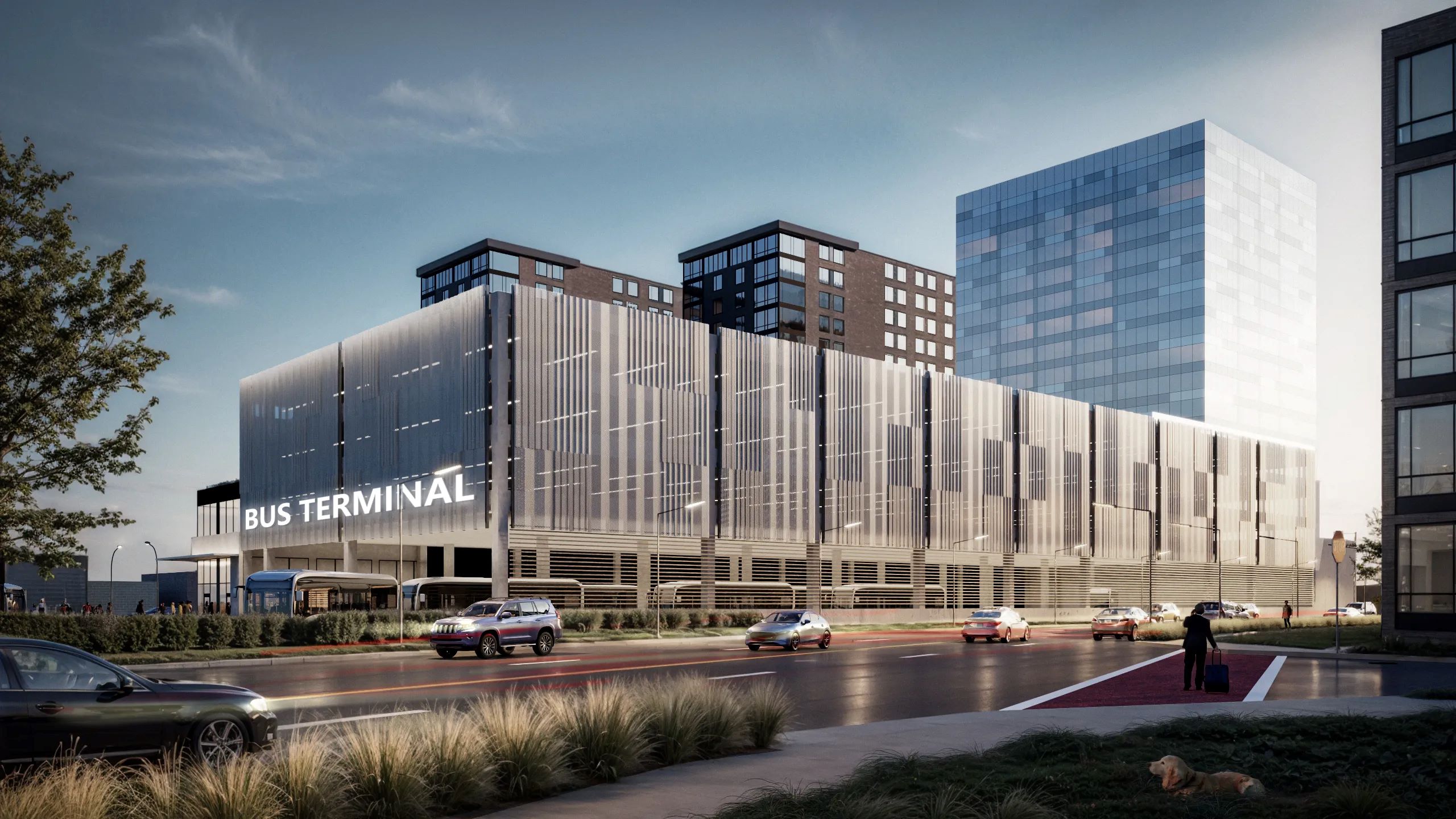
In January 2025, the City Council approved plans to redevelop the bus terminal into a modern hub featuring 168 workforce housing units, five stories of office space, and ground-floor retail, with construction on the covered facility and electric bus infrastructure slated to begin later this year. Hackensack followed this by approving The Sapphire, a 100-unit, mixed-use building near the terminal that includes 5, 600 sq. ft. of ground-floor retail and 7,800 sq. ft. of rooftop office space at 131-148 Main St.. These projects join other recent developments in the terminal’s immediate vicinity, including the 378-unit Brick of Hackensack, which opened in early 2022 at 150 Main St., and the second phase of the 696-unit Print House apartments, completed in 2024 at 160 River St..
Newark: The “Broad + Market” Node
In 2025, NJTOD highlighted Newark’s Broad + Market Transit Village, designated in 2021. While the area offers rail, light rail, and bus services, Newark is specifically a bus-based Transit Village centered around the Broad and Market Bus Stop. As state’s largest city and a commercial hub, Newark hosts major employers like Prudential Financial, PSEG, University Hospital, and Newark Liberty International Airport.
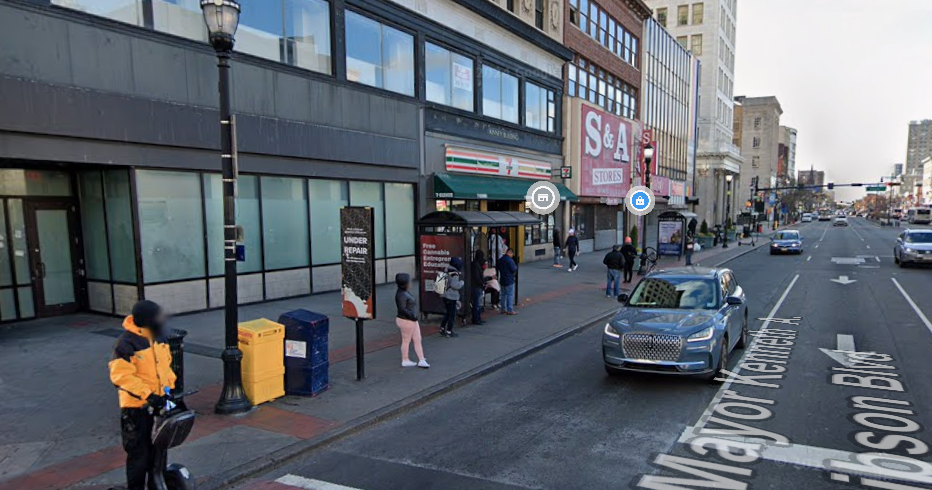
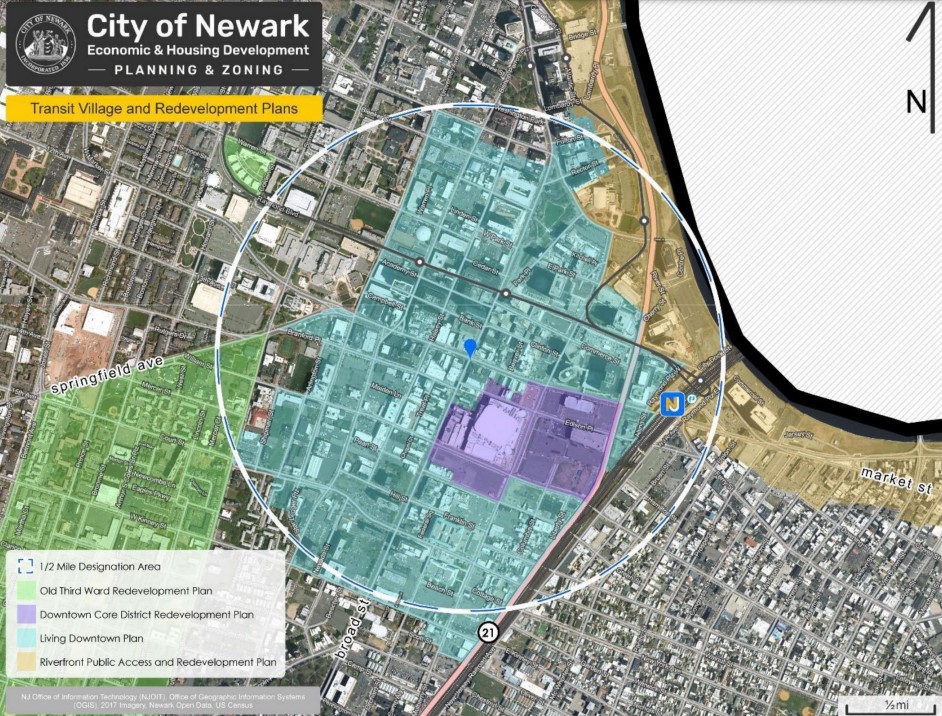
Leveraging these assets, Newark approved over 6,700 housing units between 2020 and 2023—a 61 percent increase over the 2007–2019 period. The City utilizes flexible zoning, height requirement reductions, PILOTs, and state-funding sources like the Aspire program to drive growth, particularly in the Living Downtown Redevelopment area. Planning Director Pallavi Shinde has indicated that expanding height and land use amendments to the Downtown Core Development area could offer further growth opportunities. To ensure affordability, Newark employs an Inclusionary Zoning Ordinance (IZO) requiring 20 percent affordable units on projects with 15 units or more, expands rent control to include middle housing, and utilizes Section 8 vouchers to facilitate first-time homeownership. These policies address a critical need: according to 2023 American Community Survey data, over 51 percent of Newark renters are rent-burdened, with median gross rent consuming 34.5 percent of median household income.
Newark functions as both a bedroom community to New York City and a commuter hub, with 55,755 people both living and working in the city. Public transit is essential; nearly 44 percent of renter households do not own a car, the second-highest rate nationwide, behind New York City. NJ TRANSIT’s NewBus Newark network redesign project found that 58 percent of Newark bus riders have household incomes below $35,000 and 80 percent ride at least five times per week. Consequently, the Newark 360 Master Plan recommends expanding bus service to improve local connectivity rather than prioritizing regional commuters.
According to the Regional Plan Association (RPA), Newark saw 51 million bus trips in 2024, with 9 million occurring at the Broad and Market stop alone. This volume significantly exceeds the 7.1 million annual commuter rail trips ending in Newark; in fact, NJ TRANSIT only provides about 17 percent more rail trips across the entire state than it provides bus trips within Newark. Historically, the intersection of Broad and Market served as Newark’s main transit and commercial corridor, earning the title of the “busiest spot in America” in the early 20th century with 120,000 daily trolley users and 180,000 pedestrians. Despite mid-century declines, the area remains vital to the city’s success, and Newark’s current revitalization strategy focuses growth around transit activity.
The Transit Village area includes 63 bus stops serving 17 routes, 3 light rail stations, and Newark Penn Station, which collectively transport over 78,000 daily users. Newark chose Broad and Market as its Transit Village anchor specifically for its central, multi-modal location. The Broad and Market stop offers service on lines 27, 39, 13, 24, 62, 30, GO28, and 40, with peak frequencies ranging from every 10 minutes on the 13 line to every 35 minutes on the enhanced GO28 route. This high-frequency access, combined with the developer-friendly Living Downtown Plan and the use of PILOTs, has attracted major investments, including the under-construction, 514-unit Summit Tower, the three-phase 1,075-unit Halo Towers, and the 100-unit adaptive reuse Indigo Residences.
BRT and Future Bus Transit Villages
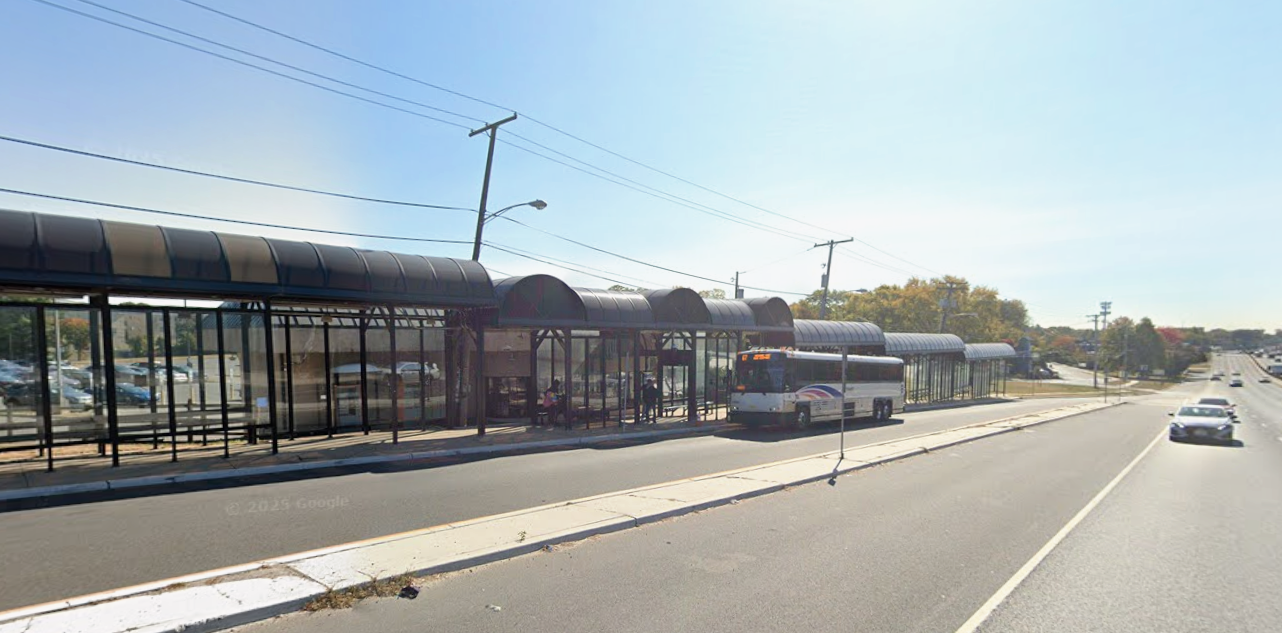
To further leverage the development potential of bus stations and terminals, New Jersey has the opportunity to advance bus rapid transit (BRT) projects along existing high-ridership corridors. Research shows that buses can provide large impacts on housing values and development, but only when paired with infrastructure improvements such as BRT. NJ TRANSIT currently operates BRT-lite services, such as the Go Bus in Irvington and Newark, but these routes lack several core BRT features, including dedicated lanes, off-board fare collection, and full traffic signal prioritization. BRT could be a highly effective addition to New Jersey’s transit network and directly support the existing bus-based Transit Villages in Pleasantville. Irvington, Hackensack, and Newark. In 2016, NJ TRANSIT partnered with Bergen County on the Bergen County Bus Rapid Transit Study, which evaluated BRT potential in the region with the Hackensack Bus Terminal as a central hub. As both the Hackensack Bus Terminal and the Port Authority Bus Terminal undergo major redevelopment, BRT could build on and maximize the value of these recent investments.
Earlier this year, NJTOD also examined a recent NJ TRANSIT Transit-Friendly Planning program study focused on the Old Bridge Park and Ride along the Route 9 Bus Corridor. The Township has begun pursuing Transit Village designation, with the goal of becoming the state’s fifth bus-based Transit Village. As one of New Jersey’s busiest bus corridors, advancing BRT along Route 9 could expand service while helping Old Bridge achieve Transit Village status and meet its development goals around the bus station area.
Conclusion
New Jersey’s bus-based Transit Villages show that well-supported bus service can drive downtown revitalization and housing growth, similar to commuter rail stations. However, this potential depends on municipal support, development-friendly ordinances, and frequent, reliable service. Expanding (BRT on high-ridership corridors would strengthen existing Transit Villages, support new ones, and position buses as a core tool for sustainable, affordable growth statewide.
References
$3.8M Awarded in FY22 Transit Village Grants | ROI-NJ
2008 Comprehensive Master Plan Update | City of Pleasantville
2022 Master Plan Update: Reexamination Report and Land Use Plan Element | Township of Irvington
American Community Survey 2023: 5-Year Estimates
Beyond the Tracks: TOD for New Jersey’s Bus Riders | NJTOD
Broad + Market: Newark’s Transit Village and the Path to Equitable Growth | NJTOD
County Moves Forward on Bergen Junction Workforce Housing Redevelopment | Bergen County
Developer Lands Site Plan Approval for 156-Unit Rental Project in Irvington | Real Estate NJ
DMR Develops 138-Acre Rehabilitation Plan for Downtown Hackensack | Globe St.
For 333 Years, Broad Street Has Paved Way to the City’s Success | Knowing Newark
FY2025 Transit Village Grants Awarded to Eight New Jersey Municipalities | NJTOD
Hackensack Innovating Its Way to Downtown Revitalization | New Jersey Future
Hackensack Planning Board Approves Mixed-Use Project With Apartments, Rooftop Office, and Restaurant | Jersey Digs
Hackensack: New Jersey’s 31st Transit Village | NJTOD
Hackensack’s Transformation Attributed to Financial Incentives to Builders | North Jersey
Hospitality Center Promises to Bring Economic Boost to Pleasantville | Shore Local News
How a Transit Oriented Development Approach Can Rejuvenate Bus Rapid Transit Ambitions | NJTOD
Irvington Named 30th NJ TRANSIT Village | NJTOD
Luxury 270-Unit NJ Community Opens | Multi-Housing News
New Affordable Housing Community Opens in Irvington, NJ | Connect CRE
Newark 360 Master Plan | City of Newark
NewBus Newark | NJ TRANSIT
One of Downtown Hackensack’s Largest Undeveloped Sites Moves Closer to Redevelopment | Jersey Digs
Planned Redeveloped Bus Terminal Will Be Much More Than Transportation Hub | TAPInto
Pleasantville Bus Station | Amber Art and Design
Redevelopment | The City of Hackensack
The Effect of Bus Rapid Transit on Local Home Prices | Research in Transportation Economics
The Value of NJ TRANSIT | RPA
The Woman Behind Irvington, NJ’s $100 Million Affordable Housing Project | Gothamist
These North Jersey Towns Are Booming With Development in 2024 | North Jersey
Urban Infill: Pleasantville City Center | RPM Development Group