
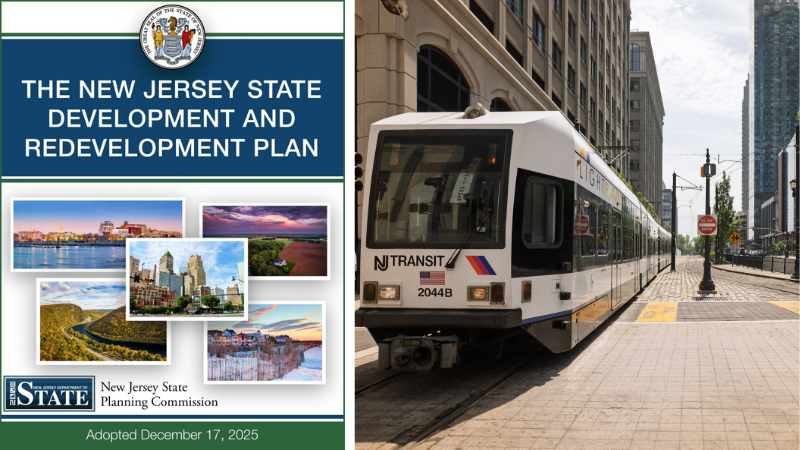
Cover of the 2025 NJ State Development and Redevelopment Plan (left); Hudson Bergen Light Rail train. Courtesy of NJ TRANSIT (right)
A plan, by definition, lays out a detailed scheme for achieving an objective. Additionally, a plan signals intent and invites collaboration among interdependent stakeholders. In New Jersey, 564 municipalities, 21 counties, multiple state agencies, and numerous private businesses, community organizations, and nonprofits form an intricate tapestry of autonomous agents that shape planning outcomes.

Since 1934, New Jersey has released State Plans to address the need for coordinated action in the nation’s most densely populated state. A watershed document, the State Planning Act of 1985, defined how state planning operates in New Jersey. It created new planning parameters, linked Municipal Plan Endorsement to state funding, and established the State Planning Commission and the Office of State Planning (now the Office of Planning Advocacy).
New Jersey adopted the 2025 State Development & Redevelopment Plan in December 2025 after years of planning and review. Public officials at all levels of government participated in the process, along with research institutions, consulting firms, and New Jersey residents, through multiple hearings and outreach efforts.
The updated Plan organizes policies and goals into 10 priority areas:
- Economic Development
- Housing
- Infrastructure
- Revitalization and Recentering
- Climate Change
- Natural and Water Resources
- Pollution and Environmental Cleanup
- Historic and Scenic Resources
- Equity
- Comprehensive Planning
State Plan of 2001
When New Jersey released its previous State Plan in 2001, growth patterns stood at the center of concern. Sprawling development consumed greenfields and suburban land, degraded natural resources, increased infrastructure costs, and accelerated urban disinvestment. Between 1986 and 2007, developed land area grew at twice the rate of population growth, and only around 15 percent of population growth occurred in municipalities that were at least 90 percent built out.
The 2001 State Plan states:
“Since 1950, hundreds of thousands of acres of rural and agricultural lands have been converted to sprawling subdivisions, a pattern of development that destroys the character of the cultural landscape, is inefficient in terms of public facilities and services and is devoid of the sense of place that has long defined the character of life in New Jersey.”

To reverse this trend, the 2001 State Plan advanced smart growth strategies and promoted environmentally integrated, compact, mixed-use, human-scale communities. It reinforced planning around urban centers and nodes and used Plan Endorsement to prioritize funding for municipalities that encouraged infill development and open space preservation. These efforts produced measurable change. Today, nearly 60 percent of population growth occurs in municipalities that are at least 90 percent built out, and population growth outpaces land consumption.
The 2001 State Plan also highlighted the limits of state planning. A central goal focused on improving access to affordable housing by increasing supply, encouraging public-private partnerships, and preserving existing affordable housing. Despite that effort, from 2000 to 2023, median rent as a share of household income rose from 25.5 percent to 30.4 percent, and the share of rent-burdened households—those paying more than 30 percent of income toward rent—nearly doubled. Housing affordability depends on regional market conditions, income inequality, construction costs, and decisions by local governments and major financial institutions, which often have competing interests.
New State Plan Priorities
Like the 2001 plan, which set a vision for 2020, the 2025 State Plan begins with a long-term vision—this time for 2050. Key elements include centralized development in compact city centers, protected natural lands, high-quality housing near transit, targeted growth in advanced transportation and logistics, and safe, reliable streets and transit systems.
As a comprehensive statewide framework, the Plan covers economic development, natural resource preservation, urban growth, and infrastructure investment. Across these topics, the Plan consistently emphasizes transit-oriented and transit-friendly planning. Examples include:
“A top priority of the State is promoting an adequate supply of high-quality housing that is affordable to all age groups and income levels, in transit-rich locations that provide easy access to jobs, education, services, and amenities.” (p. 13)
“Enable housing growth in transit-rich, mixed-income communities, supporting multi-generational households, and providing a balanced mix of rentals, starter homes, senior housing, and market-rate units to accommodate future population growth and address affordability needs.” (p. 27)
“All New Jerseyans should have access to affordable homes in multi-modal transit-rich locations that provide access to jobs, education, health care, services, and green spaces.” (p. 28)
“Maintain or expand public transportation to existing development, and/or areas planned for center-based development, redevelopment, or infill development that provide opportunities to take advantage of the efficiencies of new or expanded mass transit services.” (p. 40)
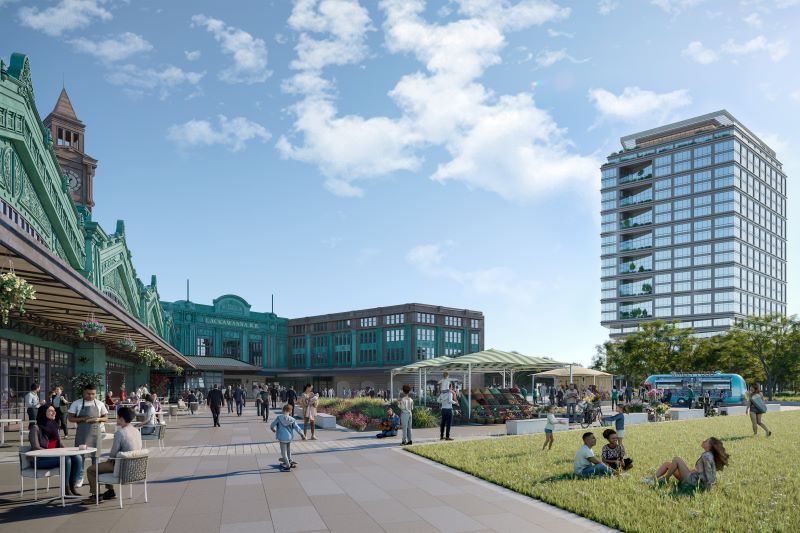
The transportation strategies call for expanded frequency and service hours in high ridership locations to reduce overcrowding and support dense residential development. The Plan also promotes pedestrian improvements around transit facilities to strengthen accessibility and support nearby development. From an equity perspective, the Plan supports expanded transit service connections between economically disadvantaged neighborhoods and employment centers.
The housing section recommends expanding development through upzoning, promoting mixed-use development, financial incentives for middle housing such as townhomes, and public-private partnerships. In transit areas, municipalities are encouraged to minimize restrictive zoning and parking mandates, integrate pedestrian infrastructure, and strengthen horizontal and vertical government coordination.
Other priority areas also relate indirectly to transit-focused growth. The economic development section supports Main Street New Jersey districts, Urban Enterprise Zones, Special Improvement Districts, and Designated Opportunity Zones, which often overlap with station areas. Revitalization strategies encourage housing development on underutilized parking lots in urban centers.
Climate and natural resource strategies—including decarbonization, reduced land consumption, and improved air quality—also align with transit-friendly development patterns.
Policies to Support the New State Plan
The State Plan sets broad goals and outcomes but leaves most implementation details to municipalities. A wide range of state, regional, and local policies could advance the transit-focused and smart growth priorities highlighted in the document. Additionally, the Plan states the Office of Planning Advocacy will develop new guidance documents to help planners implement various strategies and policies.
At the state level, the legislature could authorize stronger value capture tools such as transit-oriented Tax-Increment Financing (TIF) or expand Special Improvement District (SID) authority. Transit investment and station upgrades often produce significant nearby property value gains, yet New Jersey lacks dedicated mechanisms to capture that value for reinvestment. Research from the Alan M. Voorhees Transportation Center finds that this gap perpetuates financial challenges for NJ TRANSIT and limits project delivery.

TIF districts cap property tax revenue at a pre-project baseline and direct incremental growth to infrastructure funding. Several states use this tool for major infrastructure projects, including Illinois, Georgia, and California. Risks include reduced revenue due to overly generous PILOTs, uneven value effects affecting adjacent neighborhoods, and financial shortfalls if projected gains do not materialize.
SIDs generate revenue through special levies on properties that benefit from improvements. Because SIDs are classified as assessments rather than taxes, they can capture revenue from properties with tax abatements, effectively closing a funding gap common in TIF districts. While New Jersey’s Pedestrian Mall and Special Improvement District Act provides the legal framework, current authority focuses on pedestrian projects, missing an opportunity for transit improvements. Other states have used transit-focused SIDs to fund projects such as streetcar projects in Portland, Oregon and Seattle.
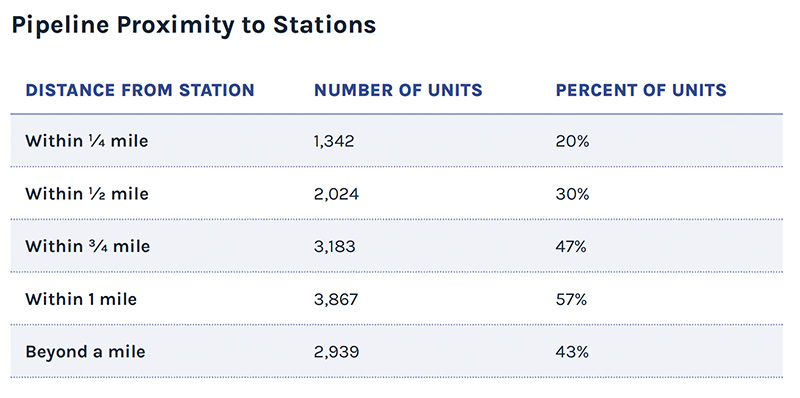
State legislation could also require or enable higher-density zoning near transit facilities. Recent examples include the 2021 MBTA Communities Act and California’s Abundant & Affordable Homes Near Transit Act (S.B. 79), signed into law in October 2025. Both expand multifamily development opportunities near transit corridors. Each has faced resistance from some local governments but has increased zoned capacity near stations. Any New Jersey version would likely require stronger parameters around proximity to transit.
At the local level, municipalities can revise zoning and development rules to support downtown and station-area revitalization. Options include mixed-use zoning, overlay zones with higher densities, and reduced parking minimums.
Mixed-use development often produces higher per-square-foot land values due to foot traffic, lower vacancy, and demand for walkable environments, a pattern documented in real estate research by Nakamura, Peiser, and Torto (2018). Expanding downtown commercial space beyond retail uses can also help diversify municipal revenue sources from household property taxes.
The State Plan notes that high property taxes affect affordability and homeownership. New Jersey also loses income tax revenue when residents work in out-of-state job centers, i.e., New York City and Philadelphia. Stronger downtown employment centers could retain more income and property tax value within the state.
Statewide programs can reinforce these local efforts, including the New Jersey Transit Village Initiative and the Main Street New Jersey program. The 37 Transit Village municipalities can access up to $2.6 million annually for station-area accessibility and pedestrian projects, while Main Street communities receive up to $750,000 in annual technical assistance. Both programs require demonstrated commitment to downtown economic development through zoning changes, planning, and local initiatives.

What’s Next?
With the adoption of the new State Plan, the State Planning Commission and the Office of Planning Advocacy are focused on implementing the goals and strategies by working with their local planning partners and state agencies. The Office of Planning Advocacy will create guidance documents and provide technical planning assistance to achieve the Plan’s goal of ensuring a vibrant, sustainable, resilient and prosperous for the residents of New Jersey..
The State Plan’s reliance on indirect implementation tools means that progress depends on coordinated action by municipalities, agencies, and private actors, supported by plan endorsement funding and the documented benefits of compact, transit-oriented development. State departments and offices will advance the plan through targeted capital investment and technical assistance.
To measure results, state officials, researchers, and policy experts should track outcomes in land use, transportation, infrastructure, climate resilience, and housing. Continuous evaluation can guide any needed adjustments and strengthen future statewide planning efforts.
Resources
2001 State Development and Redevelopment Plan | State of New Jersey
2025 State Development and Redevelopment Plan | State of New Jersey
Are There Investment Premiums for Mixed-Use Properties? | Shohei Nakamura, Richard Peiser & Raymond Torto
Autonomous Planning: Using Plans as Signals | Lewis Hopkins and Gerrit-Jan Knaap
Filling the Gaps: Highlight from Our Infill and Transit Connected Communities Forum | NJTOD
From Challenge to Resilience: The Evolution of NJ TRANSIT Funding and a Roadmap to a Reliable Future | VTC
Isn’t It Great When a (State) Plan Comes Together | New Jersey Future
Main Street New Jersey | NJDCA
Op-Ed: The Mismatch Between New Jersey’s Output and Income | NJ Spotlight News
Transit Village Initiative | NJDOT
Transit, Zoning, and Affordable Housing: Insights from Massachusetts | NJTOD