
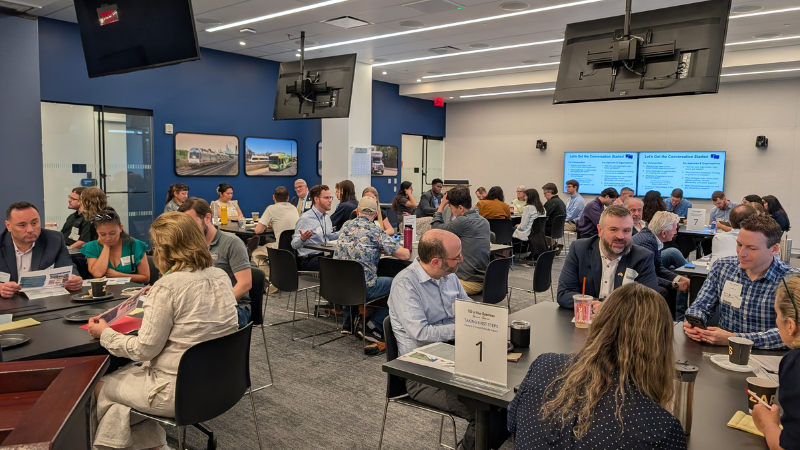
On Thursday, June 4, municipal officials, planners, and transit enthusiasts filled the NJ TRANSIT headquarters boardroom to discuss transit-friendly planning with experts from across the state. The event—Taking First Steps Toward a Transit Friendly Future, hosted by NJTOD, Downtown New Jersey, and NJ TRANSIT’s Transit Friendly Planning Program—brought together representatives from multiple agencies to highlight strategies for transit-oriented growth.
The program opened with brief presentations from each expert, followed by eight rounds of 10-minute small group discussions. The format gave attendees the opportunity to speak directly with each expert and with each other. A program from the event can be found here.
Introductions
VTC’s Stephanie DiPetrillo, Principal Investigator of NJTOD, began with defining transit-friendly planning.
Like concepts such as 15-minute cities and smart growth, transit friendly planning seeks to cluster housing, jobs, shops, and transit. Many older New Jersey towns already follow this model as this approach helps expand housing supply, strengthens downtowns, attracts investment, and preserves open space. It also works across a wide range of communities—from bus-oriented development in Old Bridge to regional destinations like Somerville, and urban areas like Jersey City.
For more, see NJTOD’s Transit Friendly 101: Back to Basics.
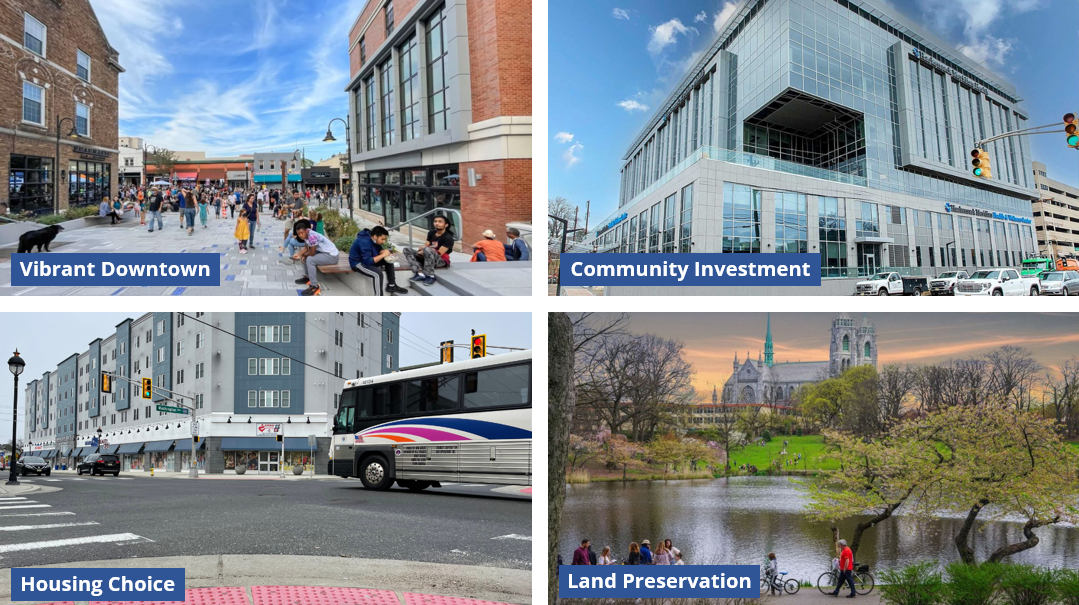
Ms. DiPetrillo also delivered remarks on behalf of Downtown New Jersey in place of Vanessa Quijano, President of Downtown New Jersey.
The experts then outlined how their agencies support transit friendly planning:
- Walt Lane (Executive Director, NJ Office of Planning Advocacy) explained how the 2025 New Jersey State Development and Redevelopment Plan promotes planning for mixed-use development and highlighted technical assistance available to municipalities.
- Megan Massey (Director of Transit Friendly Planning, NJ TRANSIT) described how the Transit Friendly Planning Program supports TOD through projects such as the Route 9 TOD Planning Project, Atlantic City Station Access Plan, and Mahwah TOD Vision Plan.
- Kristen Mitchell (Director of Transit Oriented Development, NJ TRANSIT) introduced NJ TRANSIT’s Leveraging Assets for Non-farebox Dollars (LAND) Plan, which focuses on advancing development on agency-owned properties.
- Jenin Shah (Senior Planner, NJ Department of Community Affairs) discussed local planning support, including for redevelopment planning, master planning, land use planning, economic development, and the Main Street New Jersey program.
- Jonathan Sternesky (Director of Policy and Internal Affairs, NJHMFA) emphasized the importance of financing tools for affordable housing.
- Michelle Osorio (Senior Small Business Liaison, NJEDA) outlined grant opportunities for municipalities and small businesses.
- Michael Manzella (Director of Statewide Planner, NJDOT) discussed statewide planning efforts, including the Transit Village Initiative.
Small Group Discussions
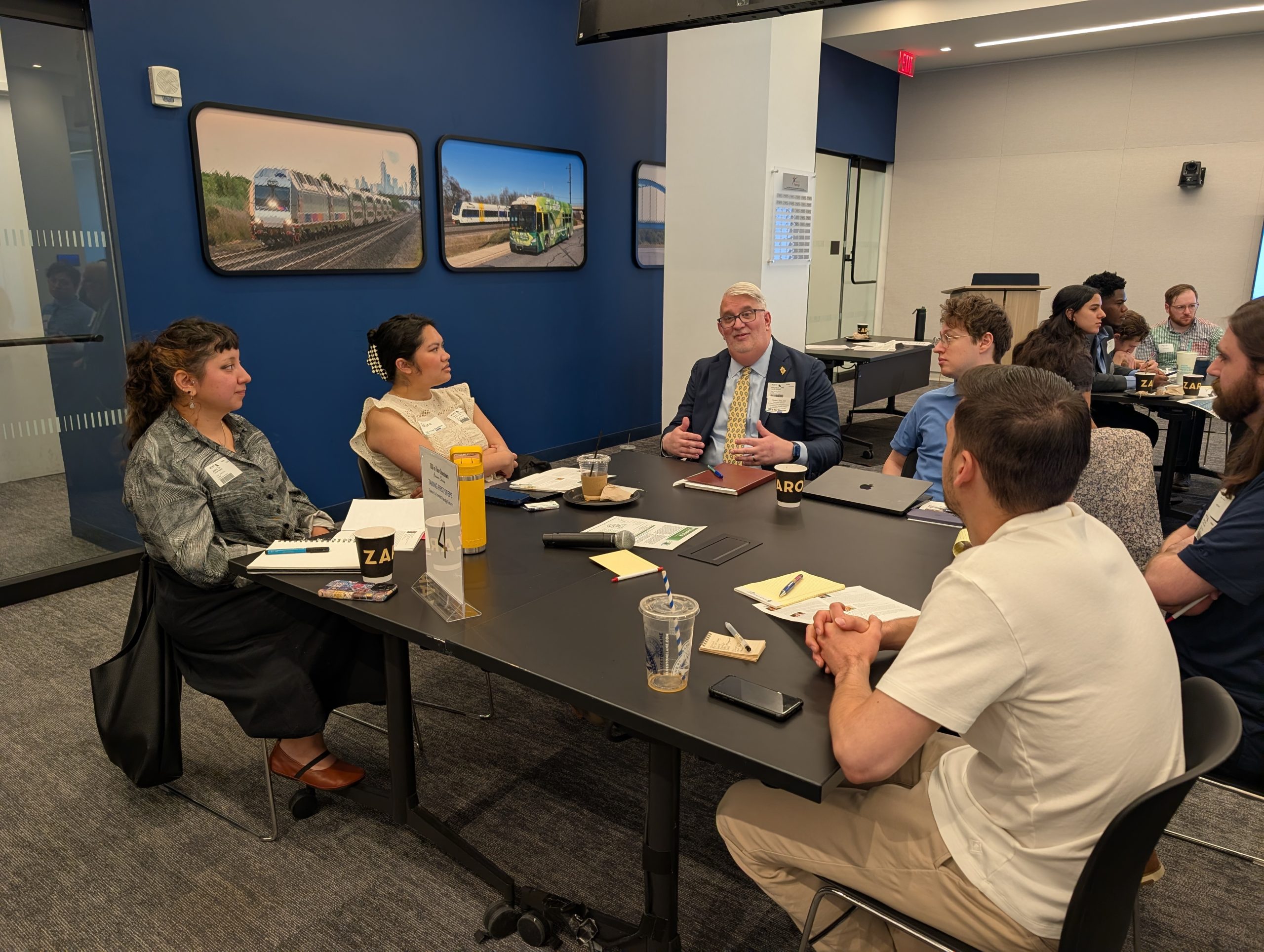
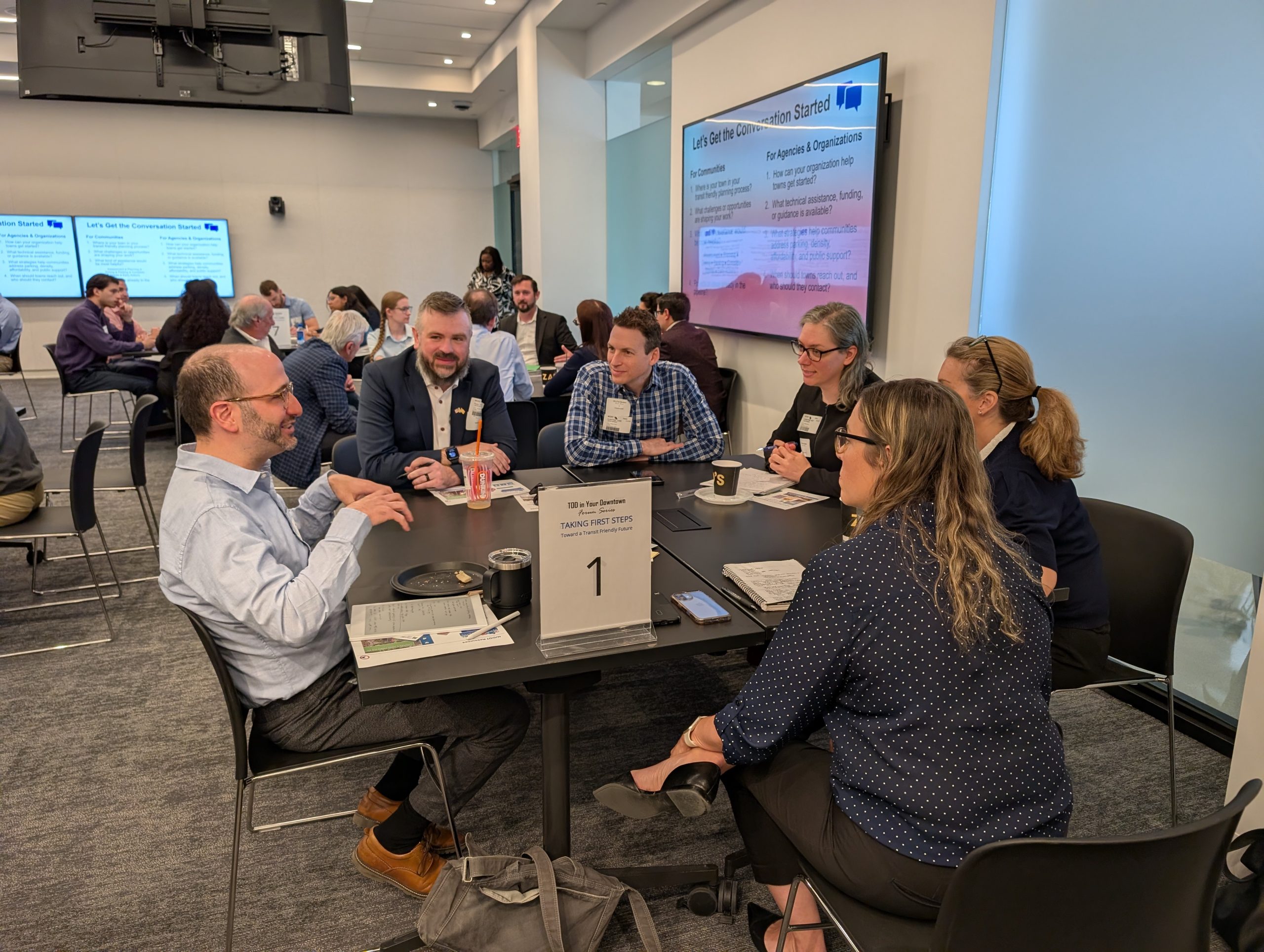
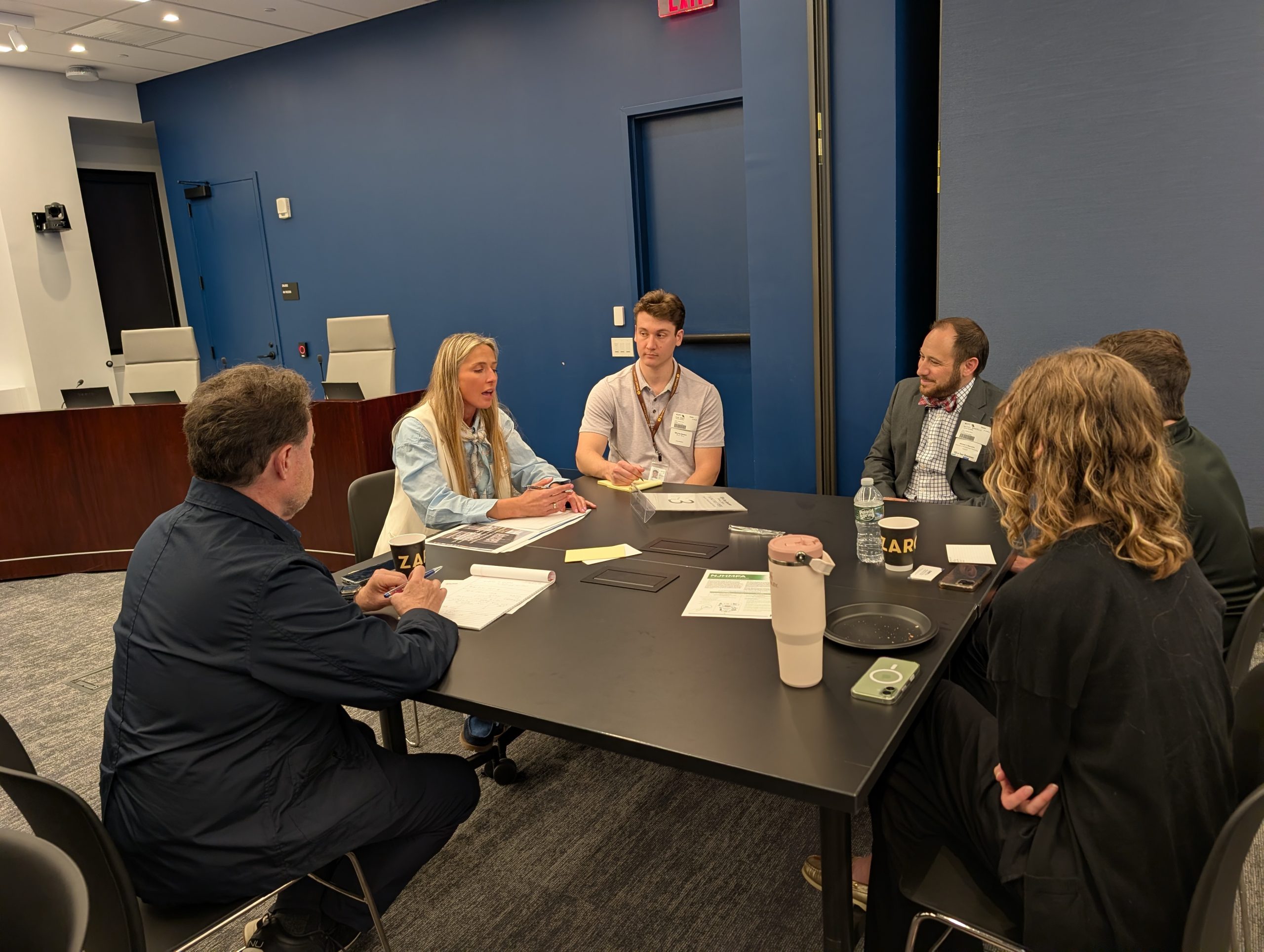
After the presentations, experts joined attendees at tables for rotating small group discussions. The discussions lasted for ten minutes, after which the experts rotated to new tables, giving attendees multiple opportunities to ask questions and engage with presenters. Note takers at each table recorded key takeaways.
Planning and Coordination
Walt Lane addressed questions about plan endorsement, agency fragmentation, and implementation challenges. He emphasized three priorities: simplify processes, strengthen collaboration, and use small projects to build momentum. He also suggested aligning programs like Plan Endorsement and the Transit Village Initiative to reduce duplication.
Economic Development and Grants
Michelle Osorio highlighted NJEDA’s funding programs and noted a key barrier: many communities lack awareness or capacity to access available resources. She stressed the value of outreach and the role of Special/Business Improvement Districts (SIDs/BIDs) in connecting communities to funding. Discussions also covered challenges faced by businesses in transit deserts and uncertainty around future funding as federal pandemic aid expires.
NJ TRANSIT Programs
Megan Massey and Kristen Mitchell discussed strategies to maximize NJ TRANSIT assets, including the LAND Plan, Executive Order 17, PILOTs, and zoning changes. Attendees raised interest in topics such as transit signal priority, bus shelter upgrades, and the ongoing work in Trenton undertaken by NJ TRANSIT’s Transit Friendly Planning Program. Questions about the NJ Transit Village Initiative yielded information on how the Transit Village team at NJDOT is developing a “how-to” guide for municipalities.
At a separate table, Michael Swan expanded on Transit Friendly Planning resources, pointing to projects in Mahwah and Pennsauken and emphasizing available guidance, including the Transit Friendly Planning Guide and the Gentle Density and Missing Middle Housing in New Jersey Guide.
Affordable Housing
Jonathan Sternesky clarified NJHMFA programs, including Low Income Housing Tax Credits (LIHTC). He noted that transit proximity and Transit Village designation can strengthen applications. He also discussed that while LIHTC remains a key funding source, rising construction costs have made projects more difficult to finance.
Transportation and Mobility
Elise Bremer-Nei discussed NJDOT’s bicycle and pedestrian programs. Common municipal concerns include school commute safety, trail and bike connections, and transit facility access. She emphasized that Complete Streets policies and plans can improve grant competitiveness.
Michael Manzella and Jelena Lasko addressed challenges with the Transit Village Initiative, including limited awareness and knowledge gaps. They suggested expanding outreach through events, webinars, and improved communications.
Local Planning and Partnerships
Jenin Shah discussed SIDs, affordable housing obligations, and aligning land use with transit access. She emphasized public-private partnerships as critical to supporting downtown development and meeting housing goals.
Final Thoughts
Through direct engagement with state agencies and planning experts, attendees gained practical tools for advancing housing, transportation, and economic development goals. Moving forward, stronger collaboration, clearer guidance, and sustained outreach will be essential to building more connected and resilient communities. The next TOD in Your Downtown event will focus on South Jersey and be held later this year.