
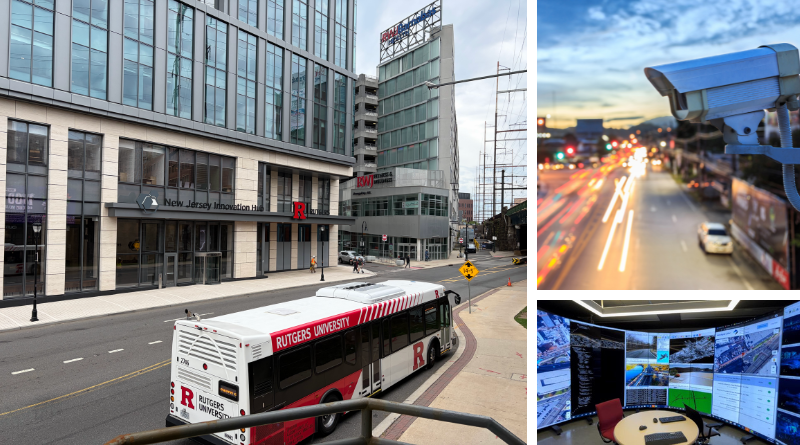
New Jersey Innovation Hub in New Brunswick, NJ; Traffic cameras; Rutgers Living Lab
The benefits of transit-oriented development (TOD) are well known. By encouraging housing, jobs, and services near transit stations, TOD can boost local economies, improve mobility, increase housing options, and reduce the costs of providing public services. As communities continue to invest in new transit projects, planners are increasingly exploring how Smart City technologies can make these developments even more successful.
Smart Cities use modern technologies and data to enhance how cities function. These tools can help manage transportation systems, conserve energy, strengthen public services, and provide residents with better information. Applied to transit-oriented development, these technologies create what researchers are now calling Smart TOD: an approach that combines dense, mixed-use urban design with data-driven solutions to improve both transportation and development outcomes. Rather than treating transportation, land use, and technology as separate initiatives, Smart TOD integrates them to support shared mobility, economic development, and community goals.
One of the most promising applications of Smart TOD is improving the transportation network itself. Technologies such as Intelligent Transportation Systems (ITS), transit signal priority, and real-time traffic monitoring can help buses and light rail vehicles move more efficiently through congested areas. This is especially important in New Jersey, where much of the transit system operates on streets shared with other vehicles. Faster, more reliable transit service benefits riders while also creating safer conditions for pedestrians and cyclists, who are an essential part of every transit trip.
Smart technologies can also strengthen the land-use side of TOD. Data analytics and mapping tools can help communities identify where growth is occurring, evaluate whether development is being distributed fairly, and make better decisions about future investments. These tools can help local governments attract new businesses, support emerging industries, and ensure that new development is aligned with community goals.
By combining technology, data, and transit-oriented planning, Smart TOD offers communities a way to get more value from their transit investments. As New Jersey expands transit services through projects such as bus rapid transit and light rail expansion, Smart TOD strategies can help improve mobility, support economic growth, and create more livable communities.
Mobility
Intelligent Transportation Systems use real-time data collection and analysis to manage the roadways, reducing congestion and improving safety. Often, these systems rely on a range of recording devices such as GPS, cameras, lidar, and connected vehicles, integrated with smart software that may use machine learning and artificial intelligence. Several areas in New Jersey have started implementing ITS.
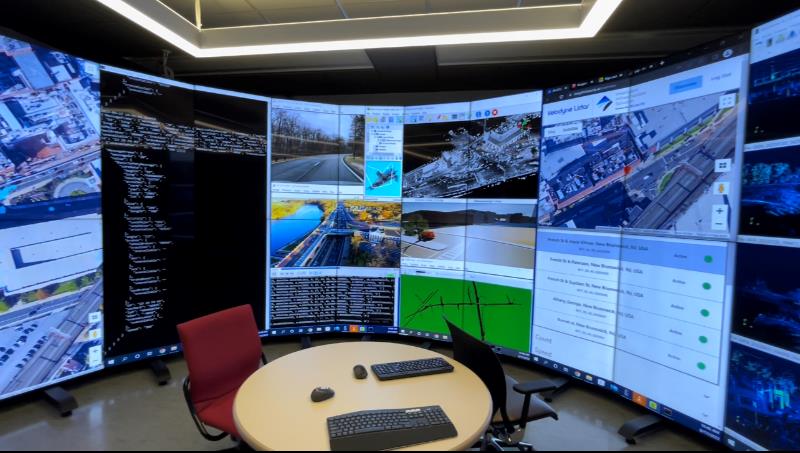
In 2022, academic and state leaders began reimagining Downtown New Brunswick as a “living laboratory” for testing connected and automated vehicle technologies. The Rutgers Center for Advanced Infrastructure and Transportation (CAIT), Verizon, and Middlesex County partnered to advance the DataCity Smart Mobility Testing Ground (SMTG) project. Supported by an NJDOT research grant, the study examined more than 2.4 miles along the Route 18 and 27 corridors, including NJ TRANSIT’s New Brunswick Station.
The project focused on improving safety and mobility outcomes for various commuter types and used high-resolution roadside sensors, lidar mapping, and Cellular Vehicle-to-Everything (C-V2X) technologies to collect live mobility data for crash scenario testing. Verizon aligned its broader 5G data networks to nearby signals to better direct commuters and ensure timely flow. This enabled more seamless communication between traffic infrastructure and mobile devices, improving intersection safety and mitigating traffic congestion.
Similar traffic signal improvement projects are also advancing in Atlantic City and the Hackensack Meadowlands District.
In Atlantic City, the Pacific Avenue Signal Optimization Project will modernize traffic operations along 2.5 miles of Pacific Avenue and strengthen the connection between the Atlantic City Rail Station and the Atlantic City Bus Terminal. Using Community Multiscale Air Quality (CMAQ) funds, the project will upgrade 35 signalized intersections between Albany Avenue and New Hampshire Avenue with improved vehicle detection, fiber optic communications, and coordinated signal timing. The project will establish a Smart Traffic Signal System (STSS) that will better identify and accommodate those walking, biking, and using transit. These improvements will allow longer pedestrian crossing times near transit stops and better manage traffic throughout the corridor.
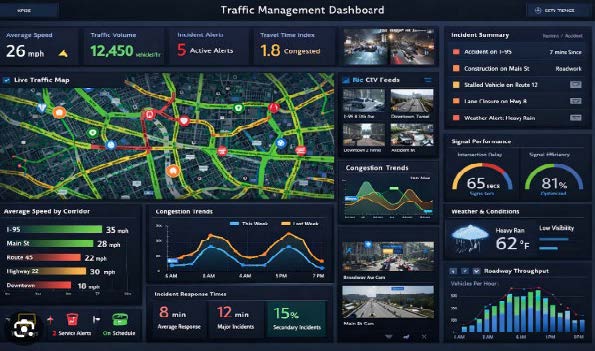
The New Jersey Sports and Exposition Authority (NJSEA) installed 123 signalized intersections across the Hackensack Meadowlands district into the Meadowlands Adaptive Signal System for Traffic Reduction (MASSTR) network. Using real-time traffic flows, the MASSTR network adjusts signal timings to reduce delays, travel time, and congestion. Now, with support from an innovation grant from the NJ State Transportation Innovation Council (NJ STIC), NJSEA will optimize the network using an advanced Automated Traffic Signal Performance Measure (ATSPM) system to proactively assess and alter the system in real time. NJSEA plans to advance this initiative along two multi-modal corridors with added priority for pedestrians and buses.
One of the most significant ways that smart technology can benefit transit and transit-oriented development is through traffic signal prioritization, which—through subtle changes—gives small priority to buses and other non-grade-separated transit.
To define traffic signal prioritization, it is important to describe what it isn’t: traffic signal preemption. A concern that many residents voice when a city or agency might introduce traffic signal prioritization is that it will slow down traffic for everyone else as transit vehicles get automatic green lights. But in the United States, that kind of control only applies to emergency vehicles and fast-moving heavy rail, often paired with loud warnings and bars that block entry.
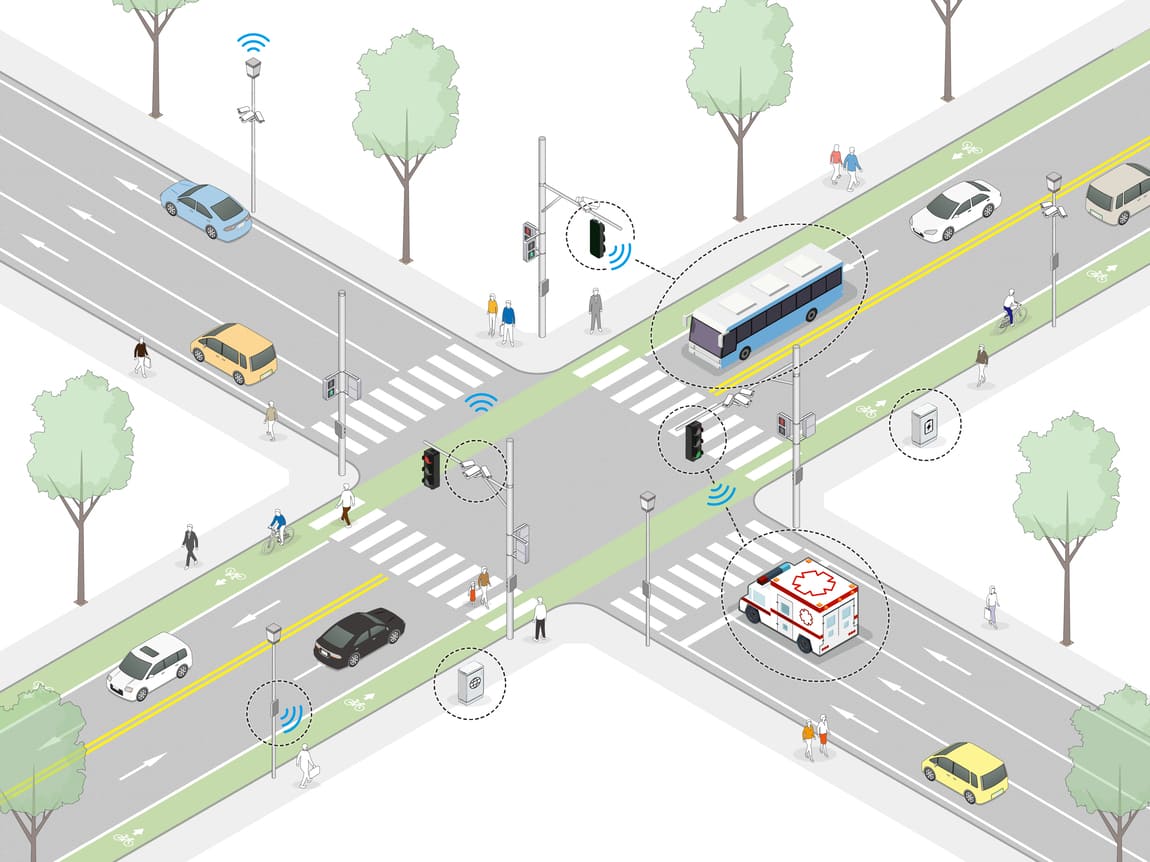
Instead, traffic signal prioritization improves travel times using minor alterations in multiple forms, including extended greens, early greens, phase insertion, and phase skipping. Most often, transit agencies and municipalities will use extended or early greens, relying on GPS data to synchronize bus travel with green lights to reduce delays. Usually, these extensions last only a few seconds to minimize the effect on vehicle travel. Phase skipping and phase insertion change the sequence of traffic signal phases to prevent long bus stoppages, either by inserting a short green phase for the bus or bypassing a red phase. It is important to note that some areas only activate traffic signal prioritization if a bus is delayed, and these approaches work best when buses operate in dedicated lanes.
Most research studies suggest that traffic signal prioritization not only benefits bus travel times, but also total traffic flow when paired with full adaptive signal systems. A field trial in Miami found that unconditional traffic signal prioritization—active whether the bus is delayed—reduced bus travel times by up to 26 percent. A similar study in Louisville found an up to 17 percent reduction for express buses compared to similar buses that did not use traffic signal prioritization. Lastly, a study of Bus Rapid Transit (BRT) in Maryland found that traffic signal prioritization reduced overall corridor travel times by up to 13 percent, benefiting both transit vehicles and general traffic.
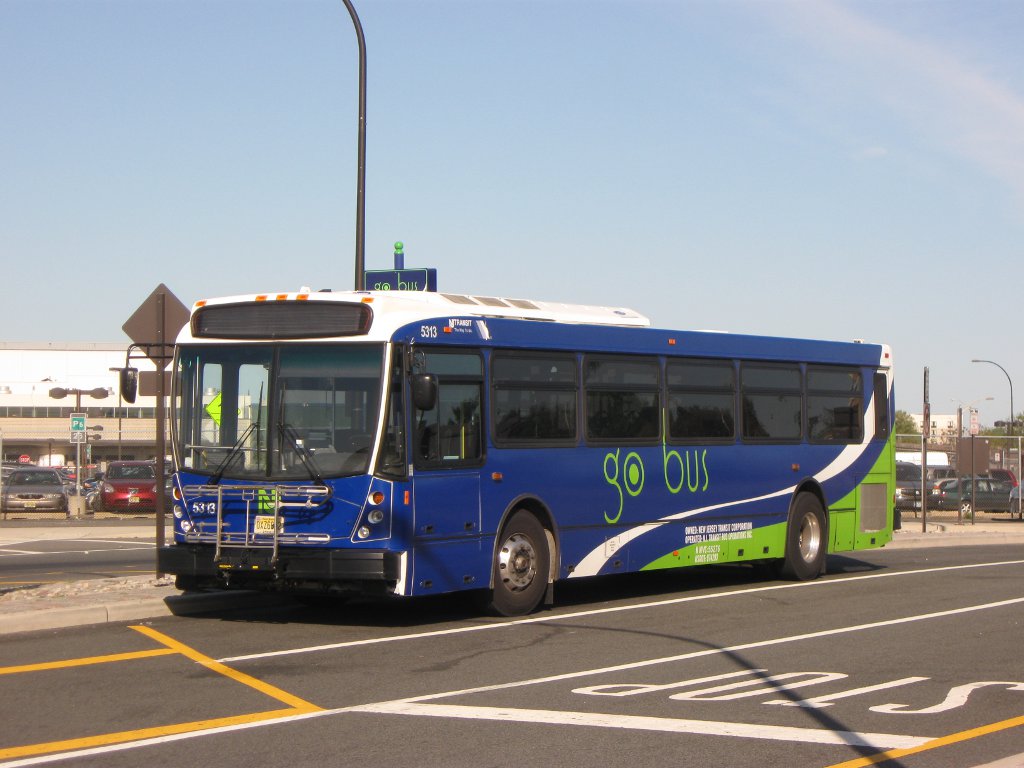
In New Jersey, traffic signal prioritization is used for buses in select cases. For example, the NJ TRANSIT GO Bus routes use it to help maintain schedules and prevent delays. It is also used at some locations along the Hudson-Bergen Light Rail (HBLR) where the tracks converge with street traffic. One traffic signal project, the Hudson-Hoboken Advanced Traffic Signal System, will target 14 signalized intersections in southwest Hoboken and 46 along JFK Boulevard in Jersey City. Added technologies will help reduce traffic idling time and improve local air quality for pedestrians and cyclists through red-light extension tools and other C-V2X capabilities.
Around HBLR station stops, the project will implement new pedestrian and transit signal timing protocols, including leading pedestrian intervals (LPI) for riders navigating station areas. In doing so, those walking to/from nearby bus stops will have safer first/last mile options that reduce travel times and potential collision risks, especially in the roadway segments between Hoboken Terminal and the 2nd Street HBLR Station.
As New Jersey looks to advance projects such as the Hudson County BRT, the Northern Branch Extension of the HBLR, and, possibly, BRT in other areas such as the Route 9 Corridor, traffic signal prioritization could help improve service quality while benefiting all road users.
Land Use
TOD communities can also generate new economic growth by advancing and utilizing smart technologies. This occurs on two levels. Following the COVID-19 pandemic, cities have faced a significant rise in office vacancy rates due to remote work and corporate rightsizing. However, research and other emerging sectors are less likely to go remote and often rely on a young professional class that prefers to live in cities with transit options. Moreover, cities can then use the innovations produced by these sectors for other economic growth initiatives. Some examples of innovation hubs in New Jersey are the HELIX in New Brunswick and recent efforts in Newark, while Hoboken has demonstrated the viability of using parking data to improve commercial districts.
The HELIX in New Brunswick is a three-building, mixed-use hub adjacent to NJ TRANSIT’s New Brunswick Station. The first phase (H1) completed construction in Spring 2026, consisting of a 12-story tower that houses the Robert Wood Johnson Medical School and the New Jersey Innovation Hub. H1 also incorporated placemaking elements, including an adjacent public space that can accommodate various public and industry events. NJTOD previously covered this story shortly after H1 topped out in September 2024.
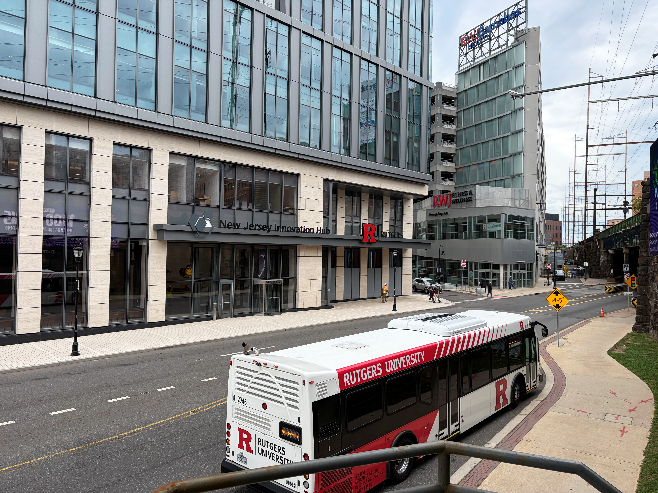
The expected completion date for phase 2 (H2) and 3 (H3) is December 2028, with plans to build 212 residential apartments, including 53 affordable units. H2 will also feature a state-of-the-art research and development (R&D) facility and house Nokia Bell Labs across 350,000 sq. ft. of office space.
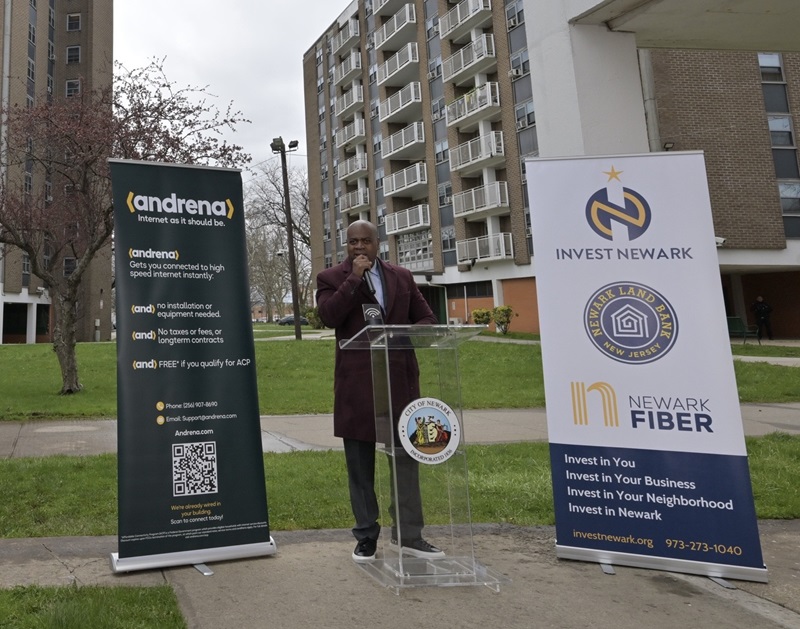
In 2023, Newark officials started plans for the creation of a downtown Innovation Hub to facilitate spaces for smart city projects, such as promoting knowledge economies in TOD zones and expanding broadband access to underserved residents. This followed goals outlined in the 2021 Connected Newark plan, which created a long-term smart city strategy focused on attracting new residents and businesses by expanding WiFi networks to handle increased consumer demand.
The plan addresses the digital divide for both residents and businesses through strengthening the Newark Fiber initiative: a 2016 plan to provide low-cost, high-speed broadband services and new digital kiosks throughout downtown. The plan also calls for improved fiber and 5G infrastructure in the City’s business district. The City hopes these enhancements will help the district attract additional residents as well as support start-up and corporate employers. In a recent interview with NJTOD, Newark Planning Director Pallavi Shinde highlighted Newark’s interest in repurposing underutilized commercial buildings for innovation hubs and tech incubators.
Connected Newark led to a collaborative project in May 2023 between the City, the National Science Foundation, Rutgers University, and other regional academic institutions to evaluate how timely the City resolved resident complaints for emergency and non-emergency issues. The partnership culminated with the development of three interactive dashboards that display demographic, parking, micromobility usage, and other transportation data. Increasing community awareness and use of these tools can catalyze TOD policy advocacy by democratizing access to data.
Another example of using smart data for growth is Hoboken’s CLEAR (Camera-based License Plate Enforcement for Access & Response Times) pilot program, which offers insights on how improving curbside management can boost local economies. Implemented along Washington Street from Observer Highway to Eighth Street during the last three months of 2025, the program used surveillance enforcement to reduce illegal parking activity. Prioritizing curbside space can improve freight movement flow for cargo e-bikes and other delivery modes. These interventions also have the potential to improve visibility for cyclists, create safer pedestrian paths, and encourage active transportation modes. According to the City’s internal data, the pilot cut parking obstructions to bikes, buses, and freight providers by 56 percent on average.
In removing these blockages, the pilot increased customer activity and strengthened commercial performance along Washington Street, including higher loading zone utilization and increased parking revenue during the pilot period. Partnering with the Hoboken Business Alliance, City officials were also able to estimate up to 60 percent longer customer visits, while short-term visits reached as high as 95 percent for food establishments.
The results are promising, as traffic citation data found that more than 93 percent of ticketed drivers did not re-offend during the study period. The pilot’s success demonstrates how transit-friendly planning initiatives can expand consumer spending and business growth for connected neighborhoods. In November 2025, the City Council extended the CLEAR program and views the technology as part of a larger toolkit to achieve the City’s Vision Zero initiative by 2030.
Final Thoughts
From traffic signal prioritization that improves mobility to innovation hubs and data-driven economic development strategies, Smart TOD can help elevate the already-existing benefits of transit-friendly planning. As New Jersey plans to advance major investments in BRT, light rail, and downtown redevelopment, integrating smart technologies can help maximize public benefits while creating more connected communities. Additionally, alongside the implementation of these smart technologies, responsible data governance policies should be passed to ensure the privacy and safety of New Jersey residents. By leveraging real-time data, digital infrastructure, and emerging innovations, New Jersey is well-positioned to demonstrate how Smart TOD can strengthen both the movement of people and the economic vitality of places.
Resources
Atlantic City Smart City Transportation Master Plan | City of Atlantic City
Beyond the Tracks: TOD for New Jersey’s Bus Riders | NJTOD
Broad + Market: Newark’s Transit Village and the Path to Equitable Growth | NJTOD
Case Study for Newark Services | Rutgers
City of Hoboken Releases Results of CLEAR Pilot Program | City of Hoboken
Connected Newark: An Assessment and Strategy for Making Newark a Leader in Connecting City Services to Citizens, Businesses, and the Community | Econsult Solutions
DataCity Smart Mobility Testing Ground (SMTG) | Rutgers CAIT
Hudson County/Hoboken Advanced Traffic Signal System – Public Information Center | Hudson County
New Brunswick Innovation Hub Smart Mobility Testing Ground (SMTG) | NJDOT
New Brunswick’s Transit Village: The HELIX in Focus | NJTOD
NJ STIC 2026 2nd Biannual Meeting | NJDOT Technology Transfer
Office Vacancy Issue in New Jersey Will Only Get worse, Experts Say. Here’s Why | Bloustein
Pacific Avenue Signal System | City of Atlantic City
The Conceptual Framework of Smart TOD: An Integration of Smart City and TOD | Land
Transit Signal Priority: Current State of the Practice | National Academies of Sciences, Engineering, and Medicine
Photo credits:
New Jersey Innovation Hub in New Brunswick, NJ. Source: NJTOD
Traffic cameras. Source: Adobe Stock | SKT Studio
Rutgers Living Lab. Source: NJDOT