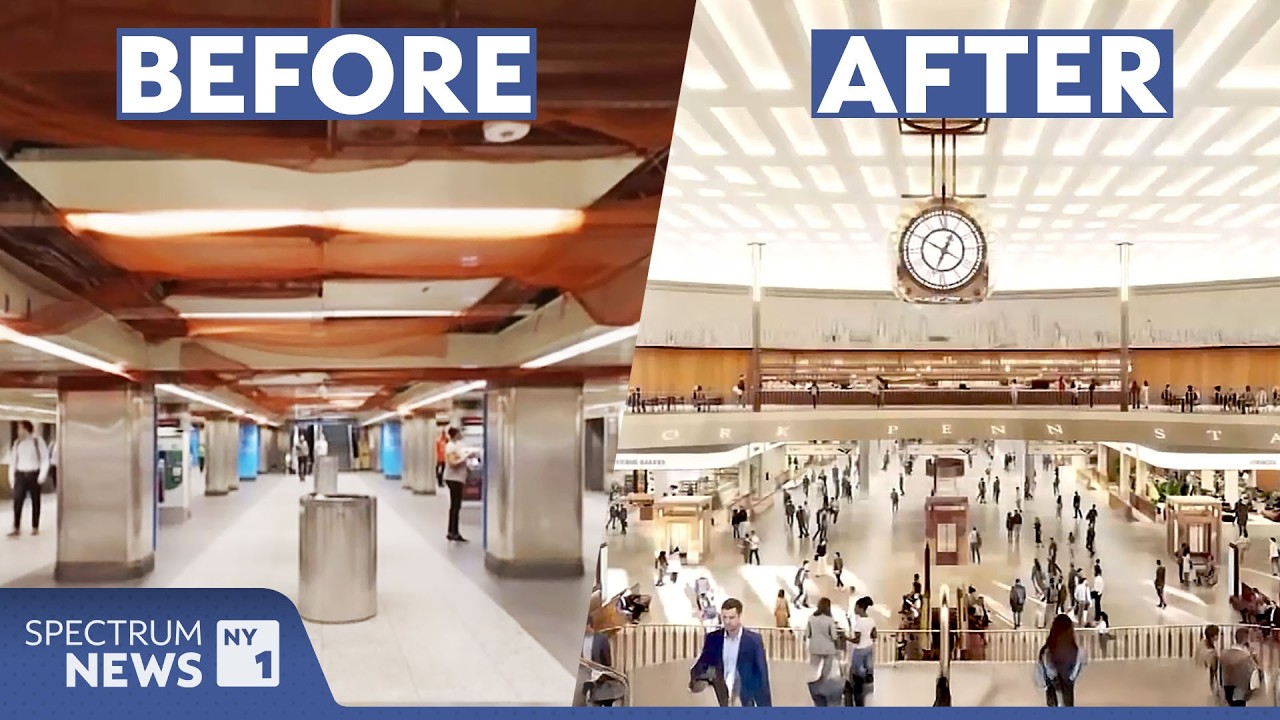
Federal officials and Penn Transformation Partners released preliminary plans for the redesign of Penn Station, aiming to make the station work more efficiently at track level while adding cosmetic upgrades.
NYC congestion pricing has brought modest traffic reductions in its first week, according to preliminary data released by the MTA. FOX 5 NY's Briella Tomassetti has the details.
Independent journalist and educator, Kyla Scanlon interviews Deputy Secretary of the Treasury Wally Adeyemo about the Treasury Department's efforts to address the U.S. housing shortage.
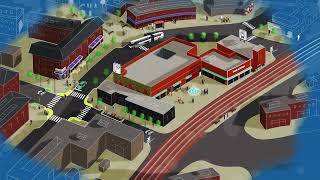
The proposed Jamaica Neighborhood Plan, currently under review, aims to rezone the area to support increased housing, job creation, and improved public spaces.
A judge has denied a request by more than two dozen suburban towns to delay enforcement of New Jersey’s new affordable housing law while their broader challenge to the law proceeds in the courts.
Los Angeles temporarily eased parking requirements during the pandemic, offering a glimpse of how much a less restrictive zoning code improves urban life.
NYC Mayor Zohran Mamdani has announced the Neighborhood Builders Fast Track program, an initiative designed to accelerate affordable housing construction on vacant city-owned land.
Explore the community-driven transformation of southeast Atlanta’s Summerhill district as it anticipates the introduction of the first MARTA BRT service.